In less than two months, South Korea’s three major battery manufacturers, long focused on the ternary‑battery route, have been aggressively securing energy‑storage orders. Their collective pivot toward lithium‑iron‑phosphate (LFP) batteries aims to offset falling market shares in the power‑battery segment.
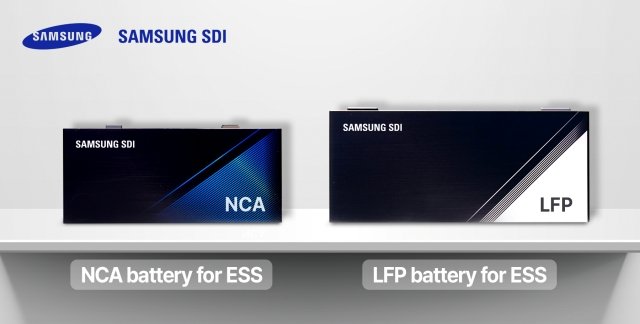
Picture: Samsung SDI
On the final day of August 2026, SK On announced a five‑year LFP pouch‑cell supply contract with U.S. energy‑storage firm NeoVolta Power for a total volume of 9 GWh. An additional 9 GWh may be added within the year, which would expand total cooperation volume to 18 GWh.
Around the same time, Samsung SDI was reported to be finalizing a three‑year LFP‑cell supply deal worth several trillion South‑Korean won with an energy‑storage system integrator, with annual supplies measured in several GWh.
Back in mid‑July, another Korean battery giant LG Energy Solution secured the battery contract for Google’s world‑largest solar‑plus‑storage project. The project has a planned total energy‑storage capacity of 2.9 GWh. LG Energy Solution will supply all storage cells exclusively, using LFP batteries manufactured in North America.
Within barely two months, the three Korean battery champions, historically committed to ternary chemistries, are scrambling for energy‑storage‑project orders. Behind this collective shift to LFP lies their strategy of leveraging energy‑storage‑business expansion to mitigate overall market‑share erosion in the EV power‑battery market.
Power‑battery Slowdown & Lost Ground in Energy Storage
LG Energy Solution, Samsung SDI and SK On used to be mainstays in the global top‑10 power‑battery rankings. In recent years, however, their global market shares have kept shrinking.
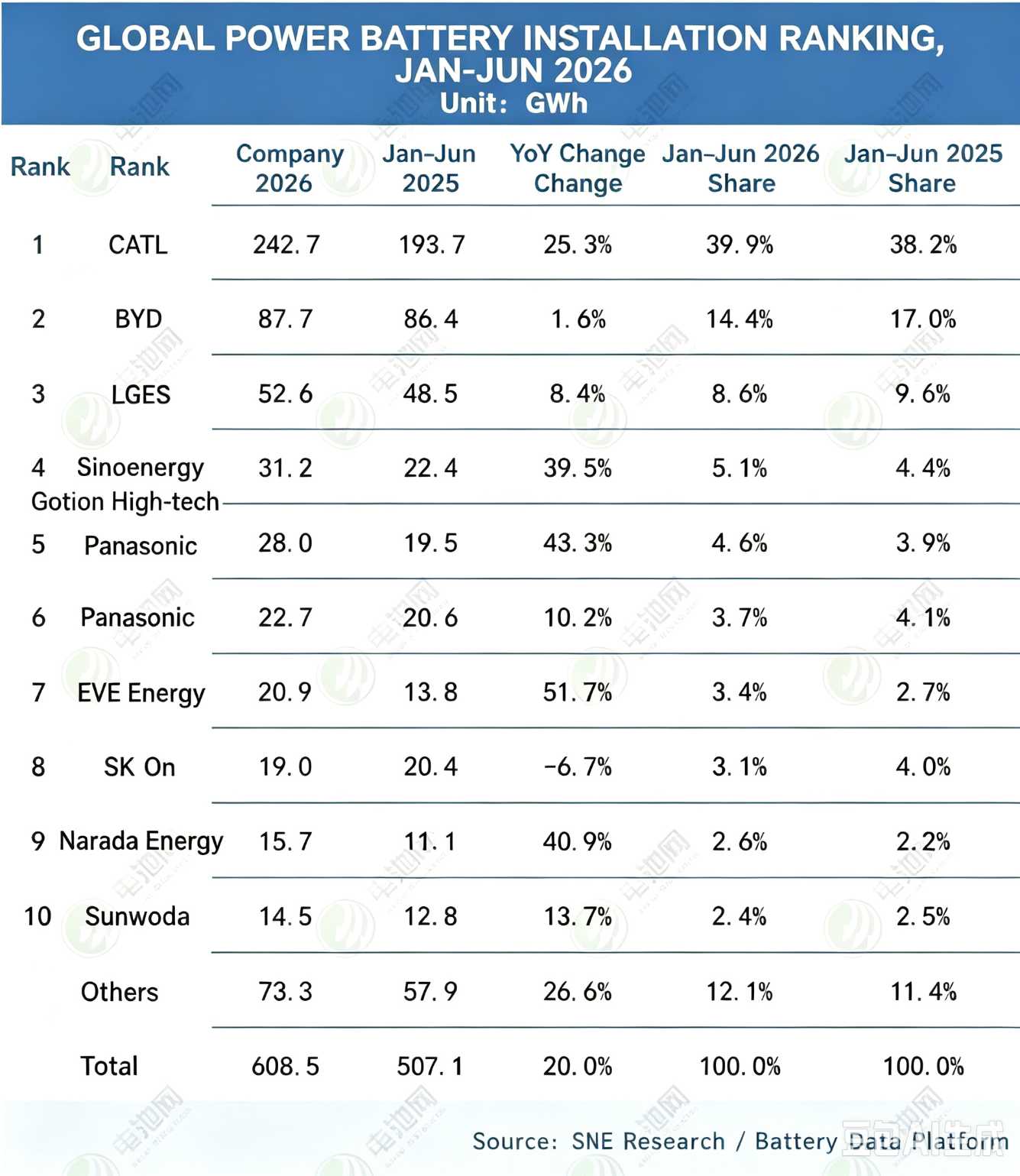
Data from South‑Korean research institute SNE Research shows:
In 2025, the three Korean battery firms held 15.4 % of the global power‑battery market, down 3.3 percentage points year‑on‑year.
Q1 2026: their combined global share stood at 15.6 %, a drop of 2.1 percentage points year‑on‑year. Samsung SDI’s installed capacity fell 27.7 % YoY, dropping out of the global top‑10 list.
H1 2026: growth slowed markedly. After Samsung SDI fell outside the top ten, only LG Energy Solution and SK On remained in the ranks. Their combined installed volume reached 71.6 GWh; their joint global market share shrank from 13.3 % in the prior‑year period to 11.7 %.
Even excluding the Chinese market, the three Korean players continue to lose ground globally:
2025: combined share at 36.3 %, down 7.4 percentage points YoY.
Q1 2026: combined share fell to 29.6 %, dropping 8.3 percentage points YoY, with all three companies posting negative growth in installation volume.
H1 2026: total installation volume hit 74.3 GWh, down 6.3 % YoY. Their aggregate global share slipped from 37.2 % to 27.6 %, a 9.6‑percentage‑point decline.
SNE Research attributes the Korean power‑battery slowdown mainly to slowing EV sales among North‑American and European automakers.
While losing power‑battery market share, Korean battery firms are also retreating in the energy‑storage arena.
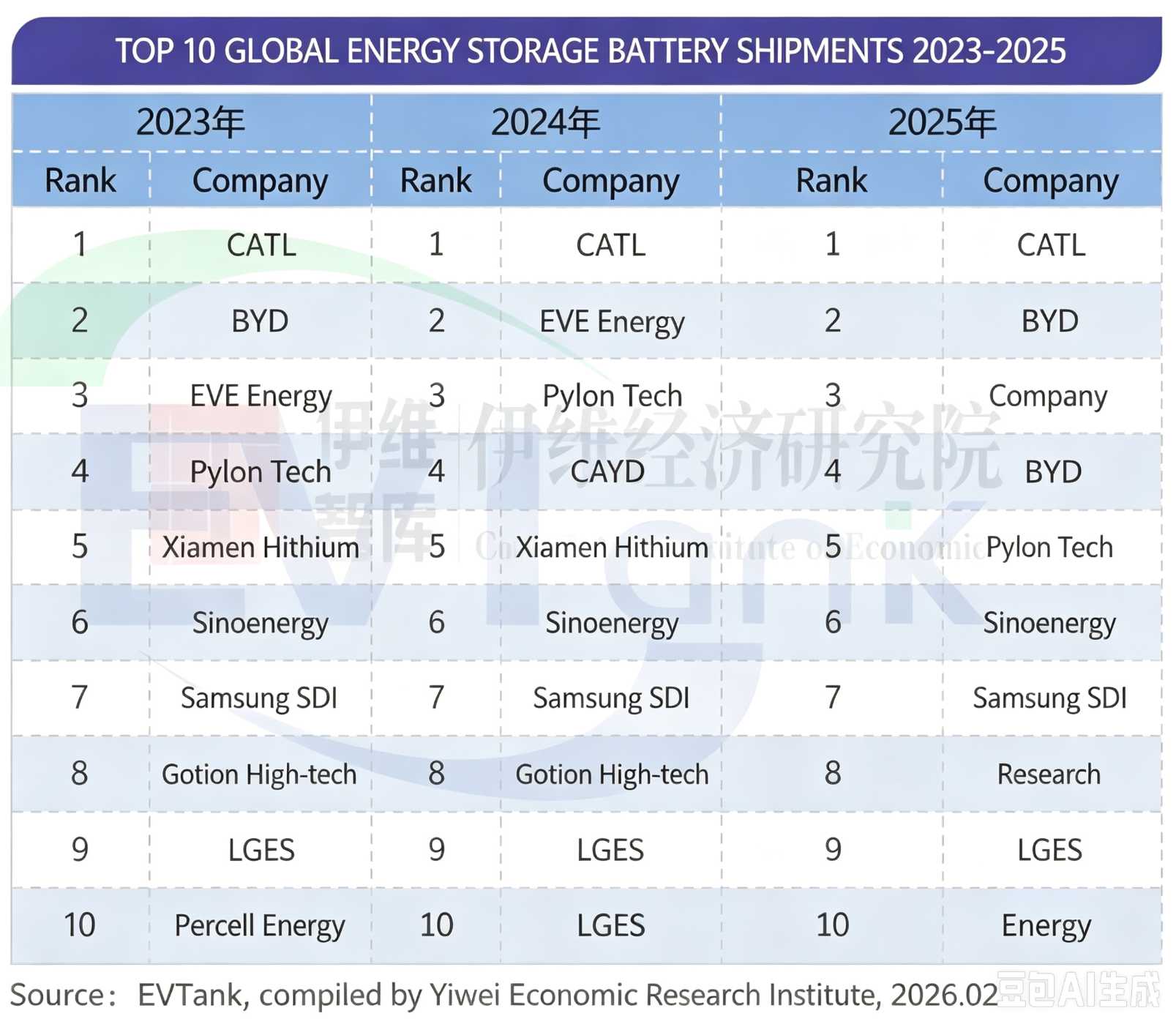
According to the White Paper on China’s Energy‑storage‑battery Industry (2026) jointly released by EVTank, Yiwei Economic Research Institute and China Battery Industry Research Institute:
Global energy‑storage‑battery shipments hit 651.5 GWh in 2025, rising 76.2 % year‑on‑year. Chinese manufacturers accounted for 614.7 GWh, making up 94.4 % of global volume. All top‑10 global energy‑storage‑battery suppliers in 2025 were Chinese companies; the two Korean firms that made the 2024 top‑10 were completely pushed off the ranking.
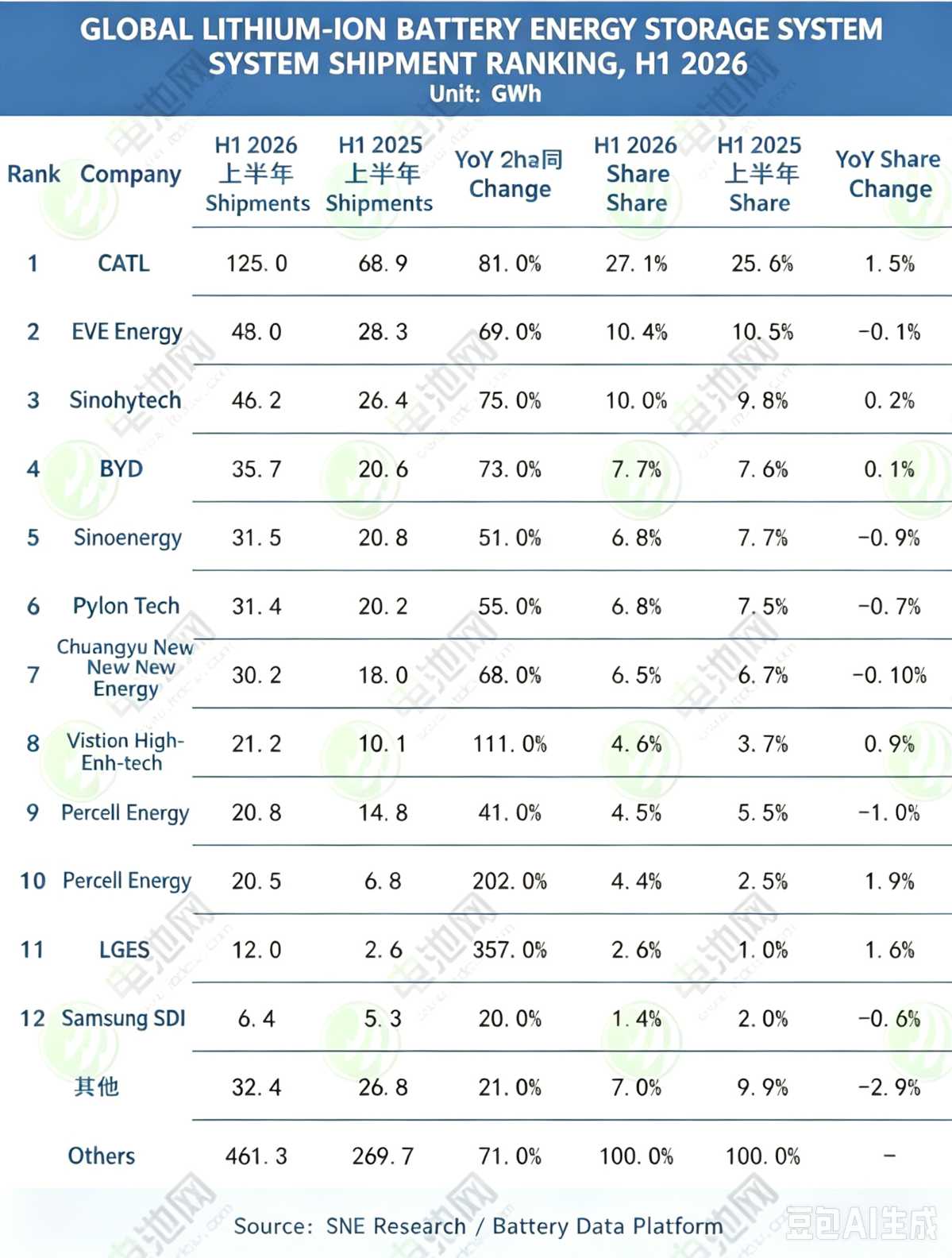
SNE Research data also indicates that global lithium‑ion‑battery energy‑storage‑system shipments reached 461.3 GWh in H1 2026, up 71 % from 269.7 GWh in the same period of the previous year. LG Energy Solution and Samsung SDI fell to 11th and 12th positions respectively, outside the top‑10.
EVTank notes that Korean manufacturers’ heavy reliance on NCM / NCA ternary‑battery chemistries has caused them continuous setbacks in the energy‑storage market.
Repurposing EV‑battery Capacity to Target LFP Energy‑storage
Behind this dramatic Korean industry shift toward LFP batteries sits one critical external factor: U.S. policy.
EVTank statistics show LFP batteries represented as high as 95.4 % of global energy‑storage‑battery shipments in 2025, having become the dominant choice, with Chinese enterprises further expanding their global footprint.
Under U.S. supply‑chain regulatory legislation, to qualify for tax credits for energy‑storage equipment, the share of battery parts and materials from “Foreign‑Entity‑of‑Concern” entities (including Chinese companies) must be reduced below defined thresholds. This has opened up major order opportunities for Korean battery players within the North‑American market.
With new orders arriving, where will production capacity come from? The three Korean battery giants share the same answer: repurpose existing power‑battery production lines for energy‑storage‑battery output.
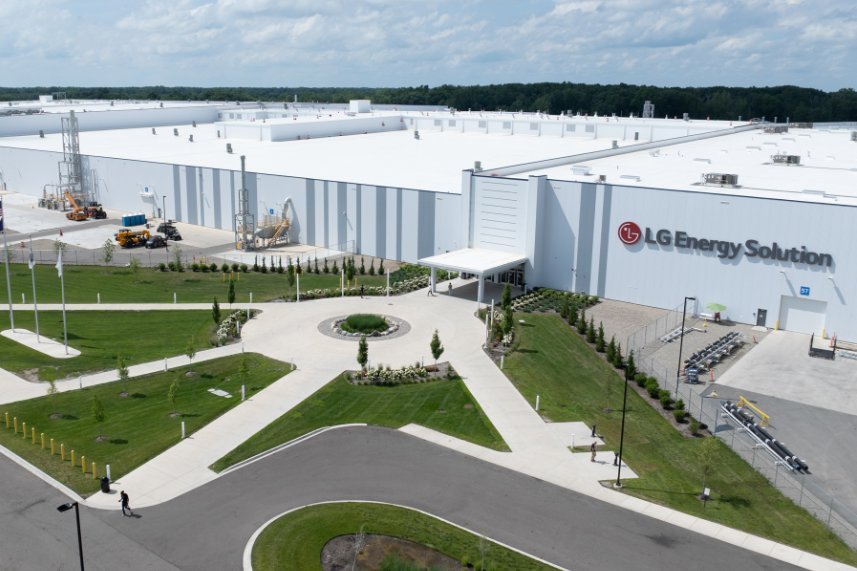
Image source: LG Energy Solution
On August 18, LG Energy Solution officially inaugurated its battery plant in Lansing, Michigan, with an annual capacity target exceeding 35 GWh. The Lansing facility manufactures large‑format cells for EVs and energy‑storage systems, including LFP storage‑battery cells.
In its Q2 2026 earnings release dated July 30, LG Energy Solution disclosed that its joint‑venture plants Ultium Cells (with General Motors) and L‑H Battery (with Honda) have both commenced mass production of energy‑storage cells.
LG Energy Solution aims to lift its global energy‑storage capacity above 60 GWh by the end of 2026, of which more than 50 GWh will be located in North America. The company plans to convert five out of its eight North‑American factories to produce energy‑storage batteries by year‑end.
On August 11, Samsung SDI announced the acquisition of General Motors’ 49.99 % equity stake in their joint‑venture Synergy Cells. The plant is currently under construction with an originally‑planned capacity of 27 GWh and scheduled for mass production in 2027. Following full takeover by Samsung SDI, the site will prioritize manufacturing energy‑storage‑system batteries once completed, to rapidly respond to booming U.S. storage‑market demand.
SK On is also taking action. Within South Korea, 3 GWh out of the 6‑GWh capacity at its Seosan plant is being retrofitted into an LFP energy‑storage‑battery production line. In the United States, sections of its Georgia EV‑battery plant are being converted for LFP production, targeting mass‑production launch in H2 2026.
To support ESS‑business expansion, SK On commands roughly 100 GWh of total capacity across the U.S., including its standalone factories SK Battery America, SK On Tennessee, plus the HSBMA joint‑venture with Hyundai‑Kia Motor Group.
It is clear that capacity conversion from EV‑battery to energy‑storage production by Korea’s three battery giants is heavily centered on the North‑American market.
Concluding Observations
Korea’s three major battery firms are already seeing early returns from their LFP pivot. In H1 2026, the combined North‑American market share of LG Energy Solution and Samsung SDI climbed from 13.9 % in the prior‑year period to 19.7 %. LG Energy Solution, the fastest‑moving player, recorded a 4.6‑fold year‑on‑year surge in energy‑storage‑business revenue for H1 2026, with newly‑signed order value exceeding 3 trillion won. Its storage‑business contribution to total corporate revenue surpassed 20 %.
Even with these initial wins, significant risks remain.
‑ Is the energy‑storage‑market boom a long‑term structural trend or a temporary frenzy?
‑ Once EV‑battery demand rebounds, can these repurposed production lines swiftly switch back to EV‑battery output?
‑ Will the “window of opportunity” created by U.S. policy close abruptly?
‑ Most critically: LFP chemistry has never been a traditional strength for Korean battery enterprises. Robert Lee, President of LG Energy Solution North America, recently acknowledged that the energy‑storage‑business transformation is complex and LG must develop expertise in LFP chemistries where it has limited experience.
This strategic turn by Korea’s three battery giants amounts to a high‑stakes gamble. It is far more than a simple business adjustment. Energy‑storage has become a no‑retreat battlefield for the Korean big three. The final outcome of this contest may reshape the future trajectory of South Korea’s entire battery industry.
Source: Battery Hundred‑People Association / Battery.com.cn
Author: Xiao He