The previous four articles kept circling around the BMS—sampling, balancing, protection. This one drills down into the most fundamental layer: the cell itself.
314Ah was once the default answer the entire industry could rely on without thinking. Projects that started with 280Ah are still running, yet 314Ah has already become the standard. But starting in the second half of 2025, that default answer began to waver. According to InfoLink, in the first half of 2026, the penetration rate of 500Ah+ cells in the utility-scale storage cell market had just exceeded 10%. Ten percent is not high, but the direction is already clear: the largest batch of power stations has begun switching cells.
Three forks have emerged in the process: going larger (587/628/790Ah), switching chemistries (sodium-ion), and customizing by scenario (long-duration专用 cells like 1175Ah). The logic behind these three paths is completely different, and looking at them mixed together easily leads to confusion. Today, we separate them.
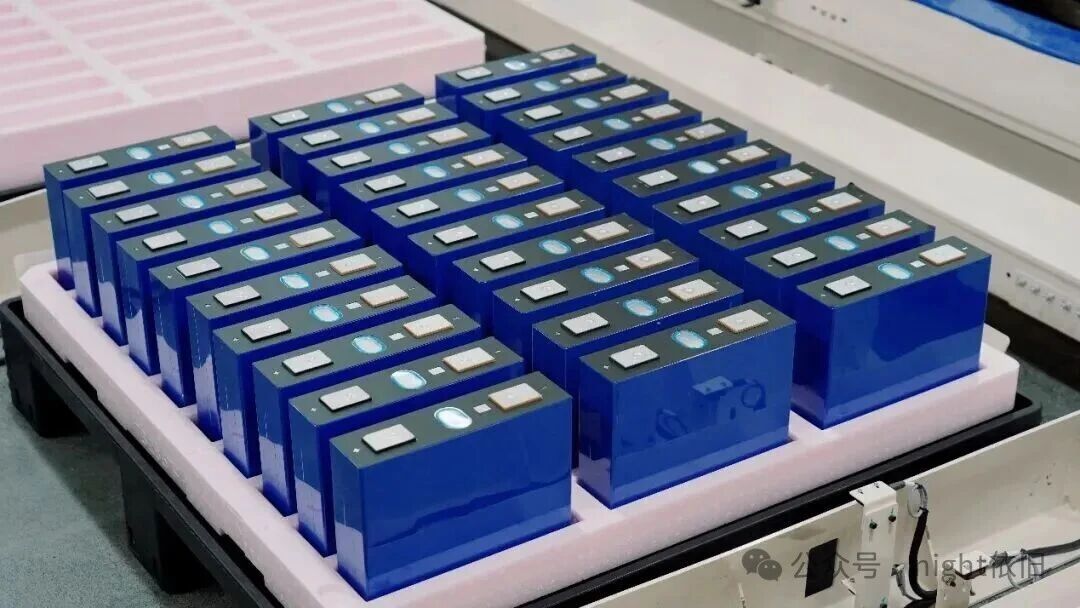
1. First, Clarify What "How Many Ah" Actually Means
Ah is capacity, not energy. The energy storage industry habitually talks in terms of Ah because prismatic cells all have a nominal voltage around 3.2V, so there is a fixed conversion factor between Ah and kWh, making conversion convenient.
A 314Ah cell is approximately 1.0 kWh, and a 587Ah cell is approximately 1.88 kWh. It looks like capacity has nearly doubled, but what really determines system integration difficulty is dimensions and energy density, not the Ah number.
Here is a particularly illustrative example. CATL's 587Ah and HiTHIUM's 587Ah have identical Ah ratings, yet their volumetric energy densities differ by nearly 20 Wh/L:
CATL 587Ah: dimensions 73.05 × 310 × 221.53 mm, 434 Wh/L, weight approximately 10.6 ± 0.3 kg (manufacturer's figures).
HiTHIUM ∞Cell 587Ah: dimensions 286 × 73.50 × 216.3 mm, approximately 413 Wh/L (manufacturer's figures).
Where is the difference? The width differs by about 12mm. With the same capacity, a thinner and flatter casing yields higher internal space utilization. So the industry saying "the same 587 differs by 20 Wh/L" refers precisely to this kind of "same capacity, different dimensions" positioning battle—the standard has not yet been set, and everyone wants to turn their own dimension set into the de facto standard.
There is one more thing that must be remembered: when looking at cycle life, the conditions matter more than the number. A standalone claim of "10,000 cycles" is meaningless. You must always look at four things together—temperature, charge/discharge rate, depth of discharge (DOD), and end-of-life capacity retention. HiTHIUM's complete statement for its 1175Ah cell is "11,000 cycles @ 25°C, 100% DOD, 0.25P, end-of-life SOH 70%"—that is a comparable formulation. CATL's 587Ah website states "after 8,000 cycles at 25°C, remaining capacity retention ≥70%," while REPT BATTERO's 588Ah states "0.25P energy efficiency 96.6%, 0.5P energy efficiency 95%." The test points are different, so comparing only the headline numbers is simply dishonest.
2. Current Specification Landscape: From 280Ah All the Way to 2710Ah
Laying out the specifications of this round of large cells, the density is almost unreal:
587/588Ah is currently the most crowded specification. CATL (cumulative shipments have exceeded 5GWh, company figures), HiTHIUM (≥11,000 cycles), REPT BATTERO (588Ah, 420 Wh/L, >10,000 cycles), Chuanergy (588Ah, over 12,000 cycles), Gotion (588Ah, 416 Wh/L, design life 20 years), and Sunwoda (588Ah, 96.5% energy efficiency) are all positioned at this point. Penghui is pursuing 587Ah with over 10,000 cycles.
628Ah is EVE Energy's Mr.Big, using a stacking process, 10,000 cycles @70% SOH.
661/684Ah: CALB's "Zhijiu" series offers three capacity versions—392/588/661Ah—rated at 15,000 cycles and a 25-year calendar life, with the additional claim of "zero capacity degradation in the first three years." Sunwoda's 684Ah uses stacking, with volumetric energy density exceeding 440 Wh/L, and claims mass production of over 2 million units.
790Ah: Envision AESC's prismatic wound product, energy density >440 Wh/L, cycles exceeding 15,000, design life 30 years. In April 2026 at ESIE in Beijing, the company announced large-scale mass production at its Cangzhou base.
1175/1300Ah: HiTHIUM's ∞Cell series, discussed separately below.
2710Ah: BYD's blade battery dedicated to energy storage—on the parameter level it belongs to another species; here we just note the number.
One statistical scope is worth noting: as of the end of June 2026, about 20 domestic energy storage cell companies had launched a total of 39 large cells, with capacities ranging from 392 to 2710Ah and cycle life ranging from 8,000 to 15,000 cycles. Among the technology routes, 26 were wound and 10 were stacked.
The trade-off between winding and stacking is quite critical. Winding rolls up a single electrode sheet, offering high efficiency and low cost, but as the winding diameter increases, stress concentration easily occurs at the corners, leading over time to electrode deformation and interface instability. Stacking places electrode sheets one by one, inherently suited to large formats, at the cost of more process steps and higher cost. Envision AESC's willingness to invest effort in winding up to 790Ah is essentially a bet that "the upper limit of low-cost processes has not yet been reached." Their explanation is that through a series of reconstructions—electrode wrinkling control, corner stress optimization, tab design, explosion-proof valve pressure optimization, and top cover welding optimization—they have shored up the weak points of traditional winding, achieving DC energy efficiency exceeding 96%.
The demand side has also caught up. China Storage Technology's 7GWh cell tender, for the first time, split conventional cells and large cells into separate bid packages; in State Grid NARI's 4GWh procurement, 314Ah and 587Ah each account for half; Jiangxi Lixing Energy's 6GWh uses 587/588Ah throughout. 500Ah+ has moved from "whether to follow" to "which one to follow."
3. Engineering Delivery: It Only Counts If It Can Be Installed in a Power Station
There is a long road between good-looking parameters and a project that can actually run. The most valuable information from this round of large cells comes precisely from the projects that have already been grid-connected.
EVE Energy's Lingshou 200MW/400MWh independent energy storage project is an unavoidable case. The project is equipped with 80 sets of Mr.Giant 5MWh DC systems using minimalist integration of 628Ah cells, plus 40 sets of booster-converter integrated cabins, and was put into operation at the end of January 2026. The manufacturer emphasizes "completing full delivery and one-time successful power transmission within one week," with cumulative production exceeding 1 million units, and on this basis locked in a 10GWh strategic agreement with Beijing Guowang Electric Power Technology.
⚠️ A note on the framing: "one-week delivery, one-time successful power transmission" is the manufacturer's promotional statement and cannot be independently verified; however, the facts that the project has been grid-connected and is the first hundred-megawatt-hour-level power station using 600Ah+ cells are both verifiable. Similar projects include HiTHIUM's application of 1175Ah/587Ah in collaboration with CRRC Zhuzhou Institute, and Mr.Giant equipped with 628Ah cells, which has already made first batch shipments to Australia and Europe.
To judge whether a company's large cells are truly viable, my current view is to look at three things: whether there are operating projects at the hundred-megawatt-hour level or above, whether there is a continuous batch delivery record, and whether there is third-party certification of the system (not of the individual cell). Everyone has single-cell test reports; only system-level certification reveals the true picture.
4. Where Large Cells Are Truly Difficult: Three Physical Constraints
Stacking up capacity is not as simple as making the casing bigger. Three hard constraints cannot be avoided.
First, the difficulty of manufacturing consistency is exponential. Longer, wider, and thicker electrode sheets make coating uniformity control dramatically harder. The two process figures HiTHIUM reports for its 1175Ah cell are very telling: coating surface density COV controlled within 0.2%, stacking electrode alignment precision 0.5mm, stacking efficiency 0.1625 seconds per sheet. What does COV 0.2% mean? It means the standard deviation of surface density across the top, middle, and bottom sections of the entire electrode sheet must be pressed down to two-thousandths—this relies not only on equipment but on the stability of the entire process chain.
Second, the heat dissipation channel has narrowed. Thicker electrode sheets...
Third, the threshold for production line transformation is high. Switching to large cells involves equipment replacement across multiple processes, including coating and wide-width rolling, with per-line investment exceeding 50 million yuan, plus nearly two months of production shutdown for modification. This figure is an industry estimate, not official data, but it illustrates something very real: competition in large cells is not just technological competition, but also competition in capital expenditure and capacity scheduling capability.
5. Matching Consistency: Even More Critical in the Era of Large Cells
There is a counterintuitive corollary about large cells: the larger the cell, the higher the requirement for consistency.
The reason is not complicated. One large cell carries the energy of two or three 314Ah cells, so its "weight" in the series chain is greater. In a series system, the usable capacity is determined by the weakest cell—this is the barrel effect. If the capacity range is not controlled during matching, the weak cell will reach the low-voltage protection point first, the BMS will cut off early, and the cells beside it will still have a pile of energy that cannot be discharged.
The matching tolerances commonly implemented in the industry today are:
Capacity range ≤ 1.0%. Converted to 314Ah, this allows a difference of about 3.14Ah.
OCV difference ≤ 5mV (for energy storage conditions below 0.5C); strictly selected production lines may tighten this to 2mV.
Internal resistance (DCIR / AC IR): the common threshold is AC internal resistance deviation ≤ 0.05mΩ, or using DCIR coefficient of variation CV ≤ 5% as the criterion.
Self-discharge: the threshold for determining abnormal daily self-discharge of LFP is often set at above 2% per month.
There are several details in matching measurement that test engineers easily get wrong:
First, OCV must be measured at 50% SOC, and after sufficient resting. Lithium iron phosphate has a very flat plateau in the 20%–80% SOC range, with voltage floating only in a small band of 3.28–3.32V. If measured immediately after full charge, surface polarization and the voltage rise at the upper inflection point will mask the true difference, and the "consistency" measured will be false. The standard practice is to adjust to 50% SOC, rest at 25°C for 24 hours, and then measure with a digital meter of six and a half digits or better.
Second, the consequence of internal resistance mismatch is localized heating. In parallel branches, current preferentially flows through the low-resistance path. A study (cited in Journal of Power Sources 2023) gives the magnitude: DCIR mismatch can cause a local temperature difference of 8–12°C. The same literature also mentions that an OCV difference of only 10mV can lead to a capacity loss of about 22% in the affected cell after 100 cycles. ⚠️ These two figures come from a corporate blog's paraphrase of the literature; I have not yet found the original page numbers, so treat them as reference magnitudes, not as definitive citations.
Third, do not look only at initial consistency. Matching addresses the initial state but cannot solve differences in degradation rate. Two groups of cells with identical initial parameters may diverge after two or three years—self-discharge rate, heat generation characteristics, and SEI growth rate are not included in factory matching parameters. This is also why more and more energy storage operators are using AI for runtime deviation identification.
6. Sodium-Ion: Not Here to Replace Lithium
The topic of sodium batteries has been heralded as the "first year" for several years, but 2026 is the first time that orders, capacity, and scenarios have simultaneously provided support.
On the product side: CATL exhibited its energy storage sodium-ion battery for the first time at the April ESIE exhibition, with a single-cell capacity of 300+Ah, efficiency of 97%, cycle life exceeding 15,000 cycles, and a "one casing, two cells" platform design—using the same casing as its 587Ah lithium cell, allowing direct switching at the system level. The company says the system life can reach 20 years. Envision AESC's sodium-ion cell dedicated to energy storage exceeds 180Ah per cell, with over 20,000 cycles and an operating temperature range of −40°C to 70°C. HiTHIUM's ∞Cell N162Ah has ≥20,000 cycles and a temperature range of −40°C to 60°C, and has obtained GB/T 44265, UL 9540A, UL 1973, and UN 38.3 certifications. Gotion's sodium-ion energy storage version claims to retain over 88% capacity at −40°C, with over 20,000 cycles.
On the order side: on April 27, 2026, CATL signed a three-year, 60GWh sodium-ion battery strategic cooperation agreement with HiNa Battery. This is the sodium battery industry's first GWh-level...
7. "Dedicated to Long-Duration Storage": The Independent 1175Ah Path
The third fork is the most worth pondering, because it is not a capacity race but a separation of scenarios.
For 4–8 hour long-duration storage projects, if still built around 314Ah cells, system integration becomes very troublesome: many series-parallel connections, many structural parts, many sampling harnesses, and even more connection points—every connection point is a potential failure point and also a cost. HiTHIUM's solution is 1175Ah.
Key milestones and parameters:
Project initiated in 2022; on June 11, 2025, at SNEC, mass production rollout of the ∞Cell 1175Ah was announced.
Dimensions 580.22 × 75.22 × 216.31 mm, ≥180 Wh/kg, ≥400 Wh/L, cycles ≥11,000 (25°C, 100% DOD, 0.25P, end-of-life SOH 70%).
Certifications: IEC 62619, UL 9540A, UL 1973, UN 38.3, GB/T 36276.
Positioning is clearly stated: designed specifically for 4–8 hour long-duration energy storage (LDES).
Some of the supporting process data were mentioned earlier; a few more: coating surface density COV ≤0.2%, stacking alignment precision 0.5mm, stacking efficiency 0.1625 seconds per sheet (a 35% capacity improvement over traditional processes), back-end manufacturing efficiency improved by 45%, and high-pressure isostatic pressing injection at 1.2MPa.
The manufacturer's stated economics are: compared with the 314Ah solution, cell cost per Wh is reduced by 7.5%, system non-cell components can be reduced in cost by 30%, and system life can reach up to 27 years. ⚠️ These are all company claims without third-party verification, so keep that in mind when reading them. But the direction is understandable: as cells get larger, the system's "non-cell costs" (structural parts, connections, harnesses, number of BMS channels) are diluted—this is a logic that holds at the physical level; how much can actually be diluted depends on the actual project.
HiTHIUM later also listed a 1300Ah product on its website, rated at ≥190 Wh/kg, ≥406 Wh/L, ≥10,000 cycles, a temperature range of −30 to 60°C, supporting 8-hour deep cycling and over 25 years of service. The intent of this product line is clear: it is not competing with 587Ah for the 2-hour market, but going after long-duration projects where 314Ah solutions are not cost-effective.
8. Today's Takeaways
One, Ah is not energy; conditions are what define life. When you see "12,000 cycles," first ask whether the four conditions—temperature, rate, DOD, and end-of-life capacity—have been filled in. Without any one of them, the number is not comparable.
Two, a large cell is not a "bigger 314Ah"; it is another engineering problem. The benefit it brings is the dilution of non-cell components, and the price it pays is consistency control, heat dissipation uniformity, the absolute energy of thermal runaway, and production line conversion costs. Only when all three are factored in does it count as a real accounting.
Three, neither sodium-ion nor long-duration专用 cells are replacements; they are complements. To judge whether a new technology route can be implemented, see whether it has found scenarios where lithium does poorly or is not cost-effective—this is far more reliable than looking at a parameter sheet.
If I were to give a "cell specification review checklist," four sentences would suffice:
Are the cycle life test conditions fully stated? Is it single-cell data or module data?
Is the energy density mass density or volumetric density? Are the dimensions compatible with the production line?
Are the matching tolerances (capacity/OCV/internal resistance/self-discharge) provided?
To what level is the thermal runaway test conducted—cell level, module level, or system level (UL 9540A)?
Source: night依旧