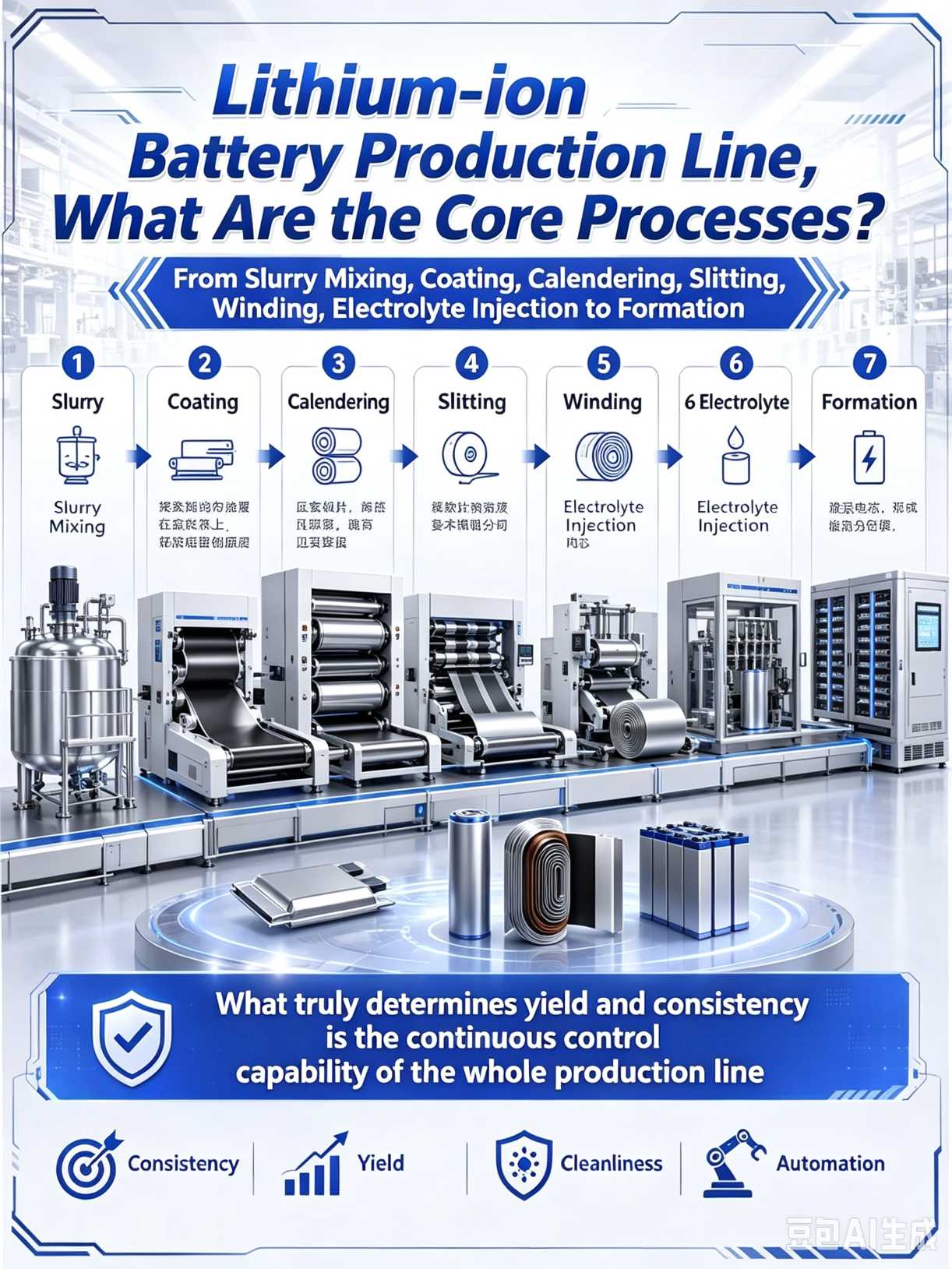
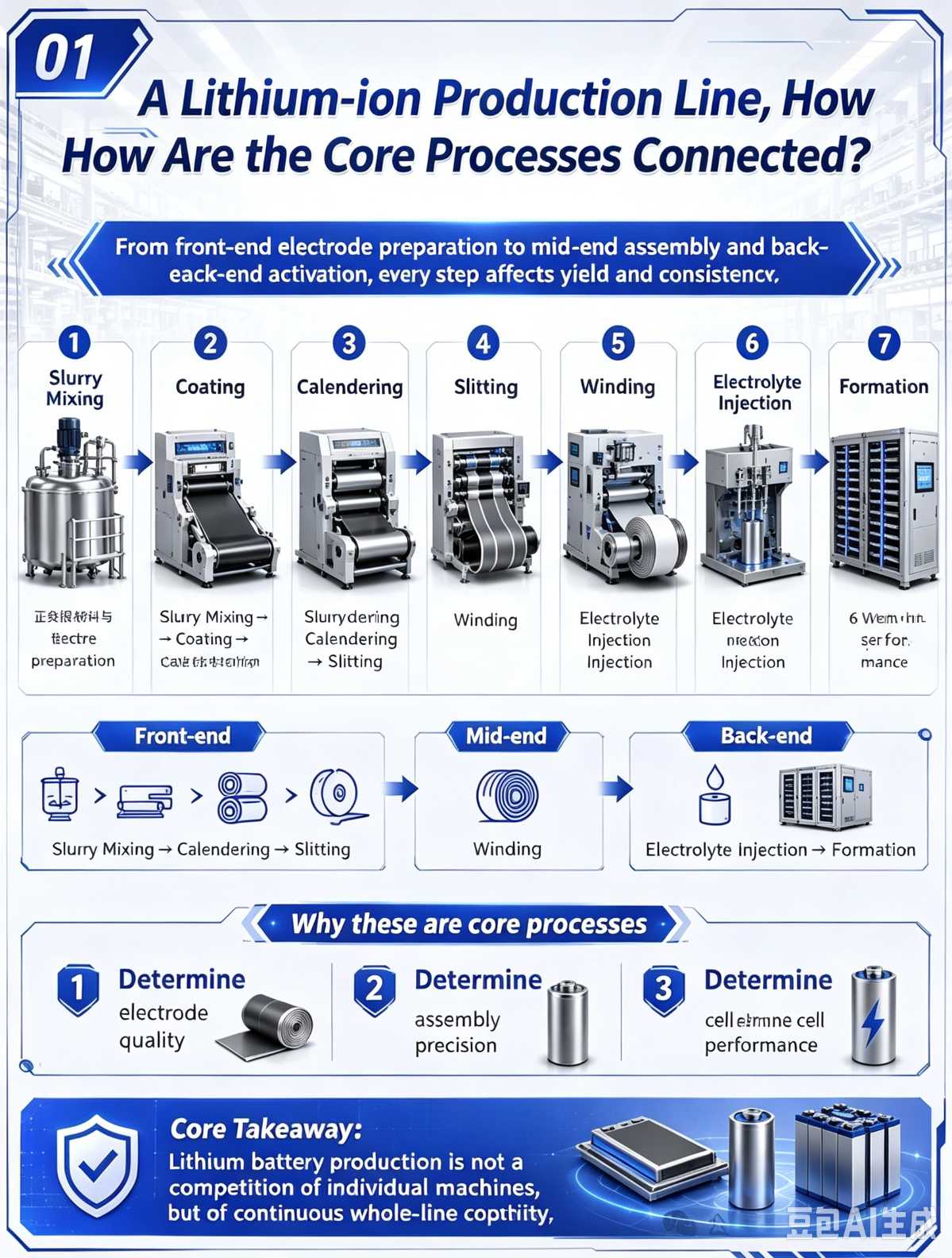
A qualified power battery is far more than simply assembling positive and negative electrodes, electrolyte and shell components. Turning raw powder materials into vehicle-grade battery cells requires an extremely precise and rigorous manufacturing process. There are seven core working procedures, each directly determining the battery’s energy density, service life, consistency and safety. A single flaw in any procedure may leave long-term quality hazards.
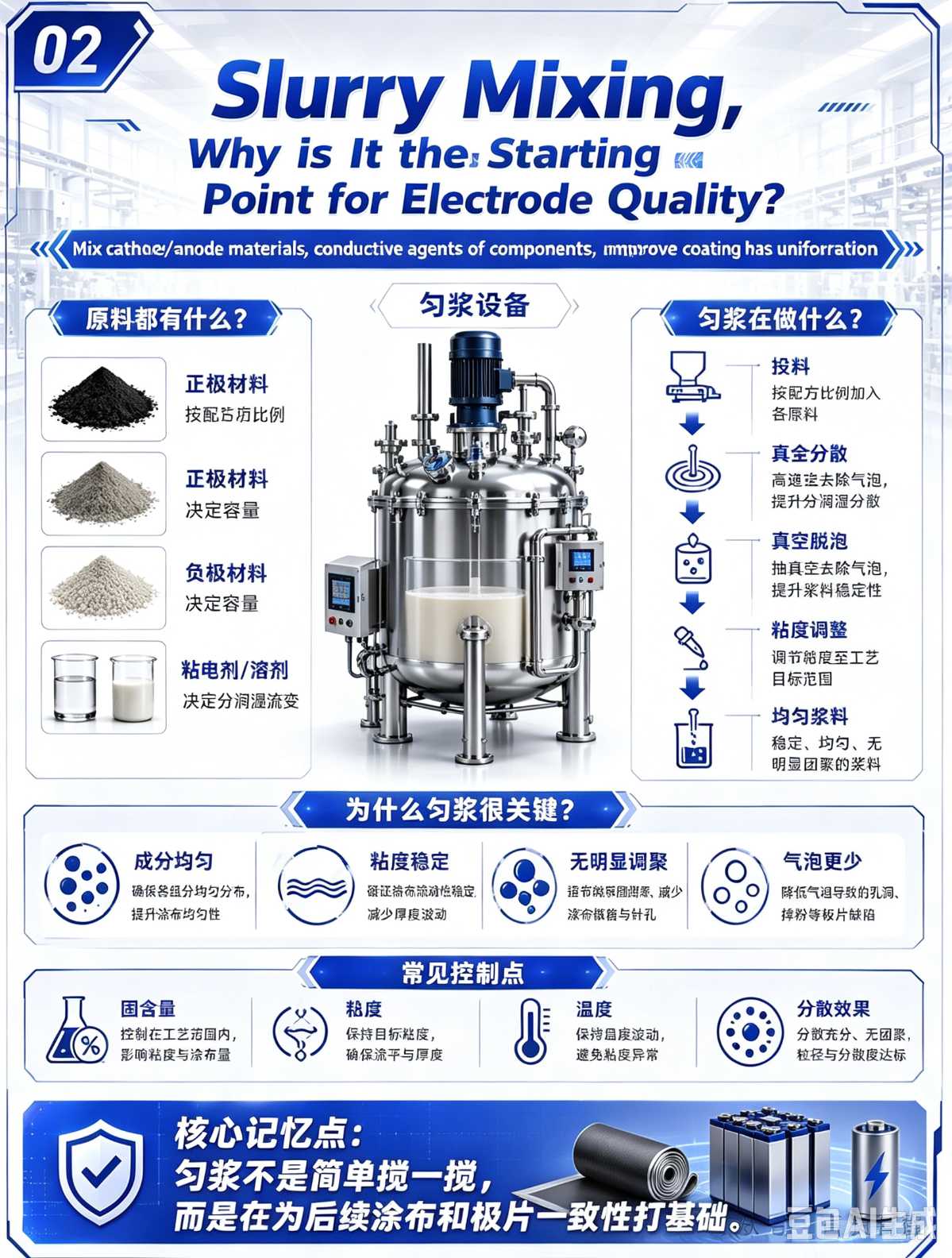
✅ ① Slurry Mixing: The "Dough Kneading" Process of Batteries
Positive/negative active materials, conductive agents, binders and solvents are stirred at high speed in precise proportions to form uniform and stable battery slurry.
Key Takeaway: Poor slurry quality ruins all subsequent processes. Particle agglomeration and viscosity fluctuations are the root causes of electrode powder falling and large cell voltage differences. Stable slurry mixing is the foundation of consistent battery performance.
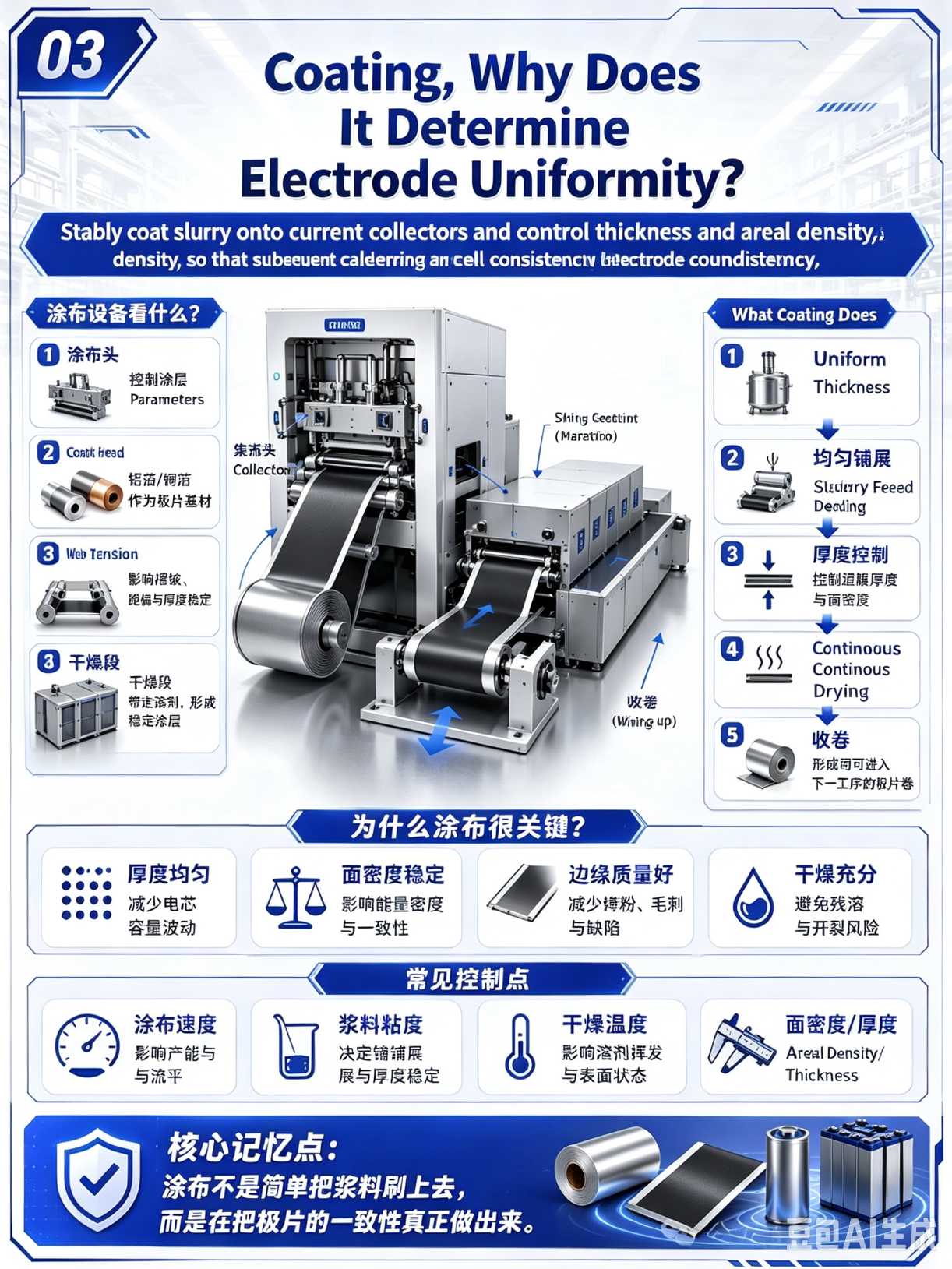
✅ ② Coating: Coating an Active Layer on Copper and Aluminum Foils
The prepared slurry is evenly coated with consistent thickness on copper foil (negative electrode current collector) and aluminum foil (positive electrode current collector), followed by drying to remove solvents.
Key Takeaway: A 1-micron thickness difference leads to huge performance gaps. Over-thick coatings cause severe polarization and high lithium precipitation risks; under-thick coatings result in insufficient capacity; uneven thickness at the edges and ends completely undermines the consistency of the entire batch of cells. Coating determines half of a cell’s overall performance.
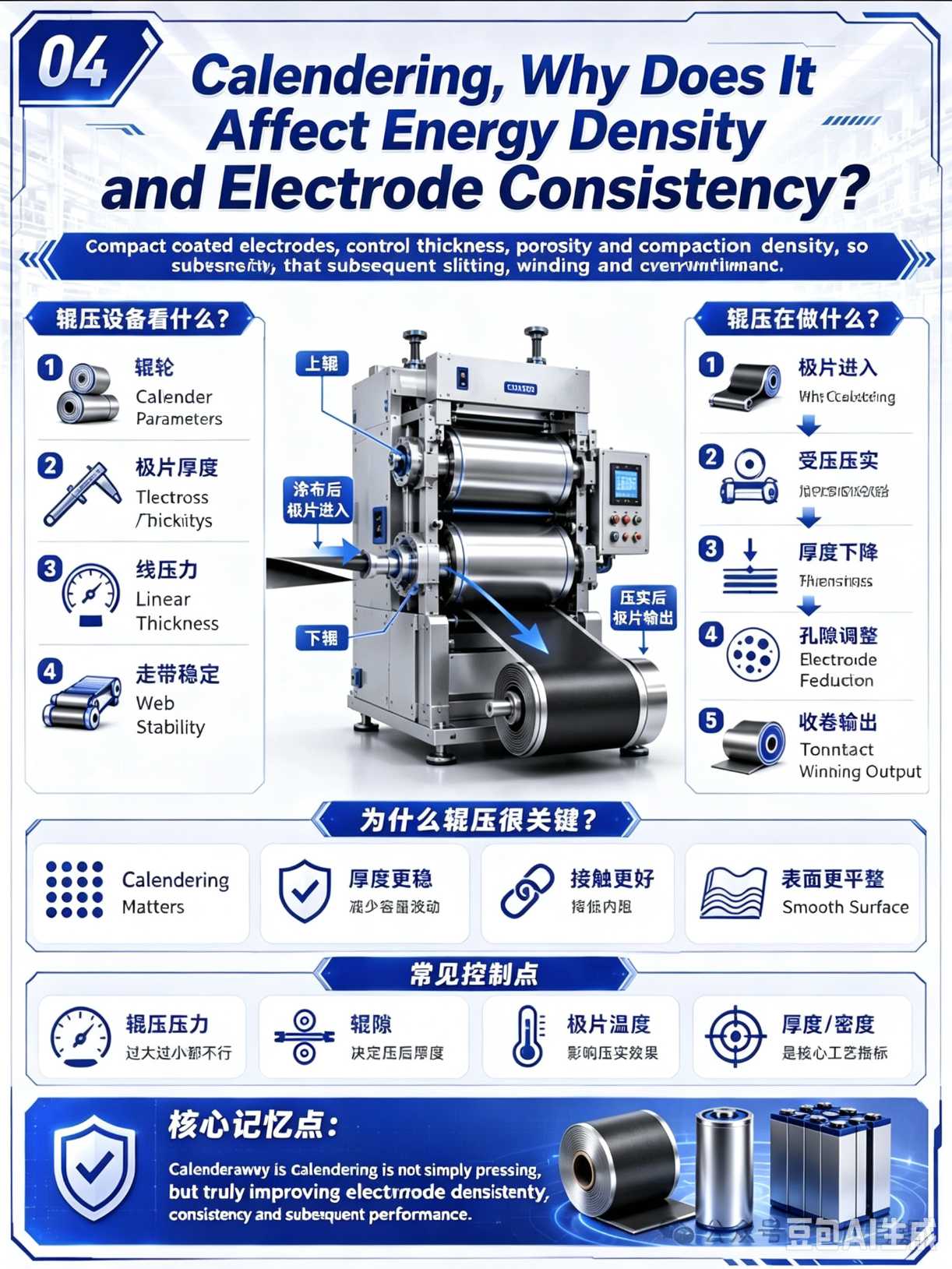
✅ ③ Calendering: Precision Shaping of Electrodes
Dried electrodes are compacted by high-pressure rollers to precisely control the compaction density and porosity of electrode sheets.
Key Takeaway: Moderate compaction is optimal, not maximum compaction. Insufficient compaction limits energy density; excessive compaction blocks micropores, prevents electrolyte penetration, and causes heat generation and gas production during fast charging. Calendering strikes the optimal balance between energy density and ion conduction channels.
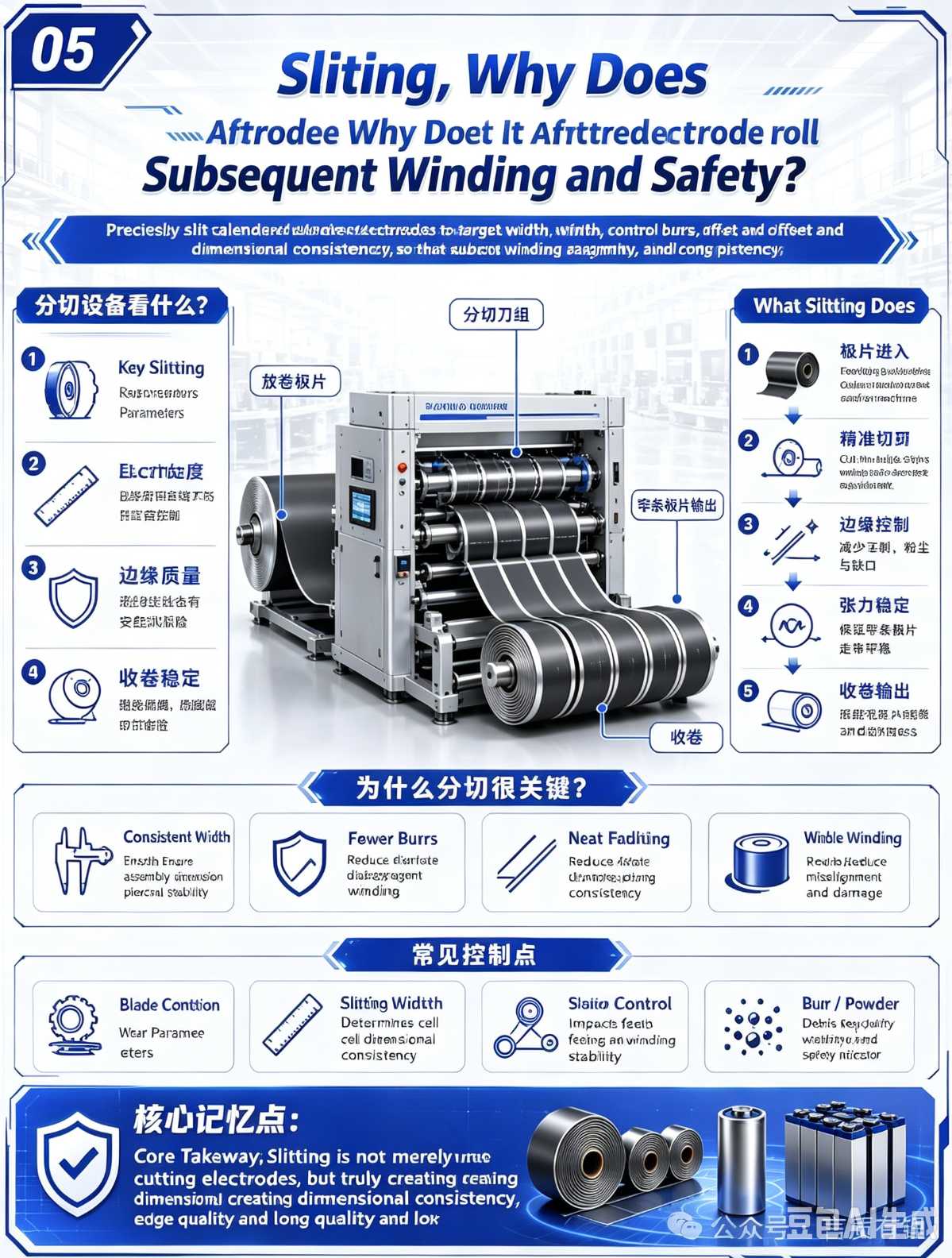
✅ ④ Slitting: Precision Cutting of Electrodes
Wide raw electrode sheets are cut into narrow sheets of standard design dimensions.
Key Takeaway: Metal burrs are hidden time bombs for battery cells. Dull cutting blades and unstable tension control produce edge burrs, which may pierce the separator, trigger micro-short circuits, and induce thermal runaway risks.
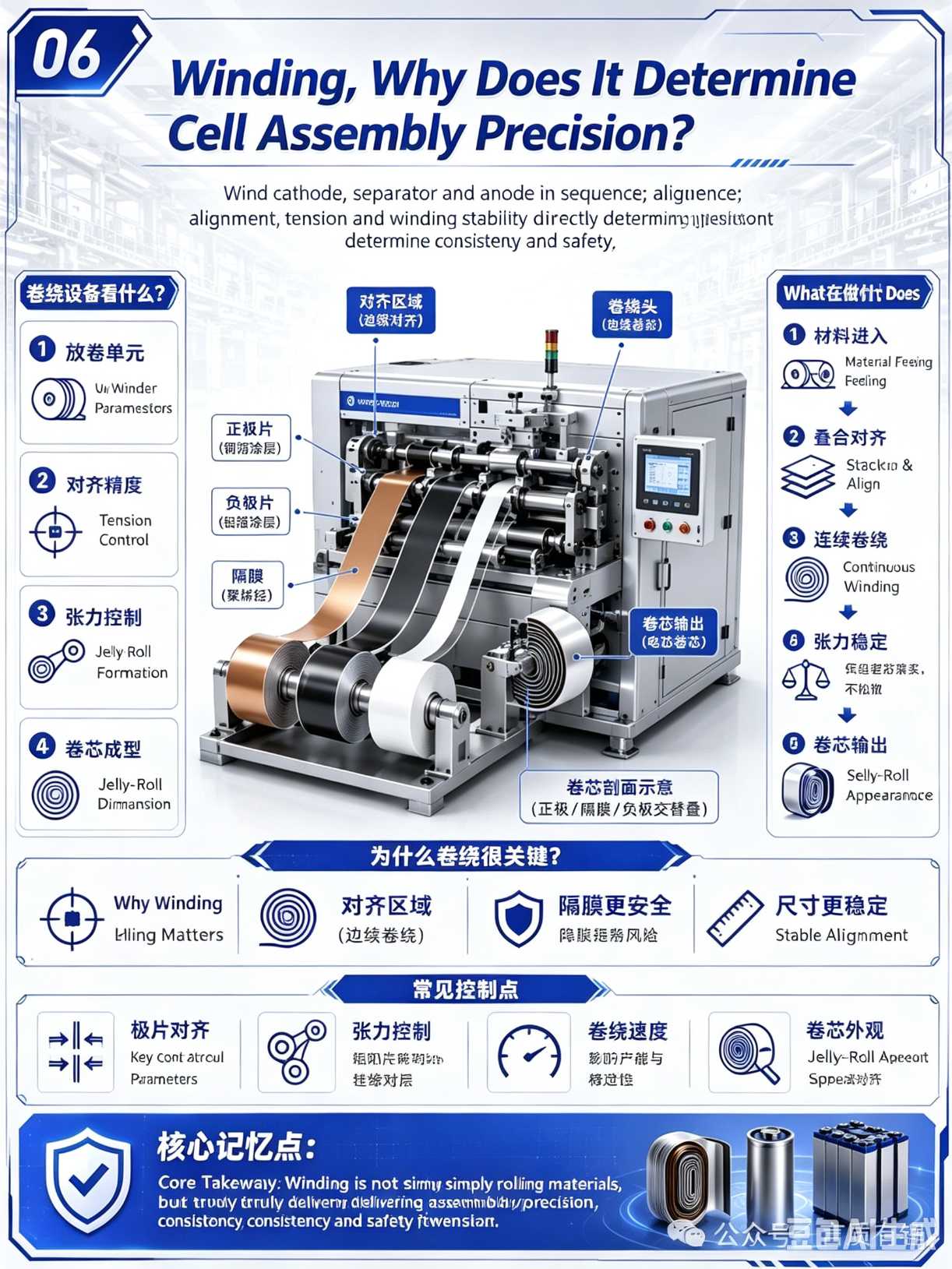
✅ ⑤ Winding: Core Assembly of Battery Cells
Positive electrode sheets, separators and negative electrode sheets are precisely aligned and high-speed wound into complete cell cores.
Key Takeaway: Alignment accuracy equals safety. Electrode misalignment, separator wrinkles and fluctuating winding tension cause local stress concentration and poor interfacial contact, leading to rapid capacity attenuation during cycling.
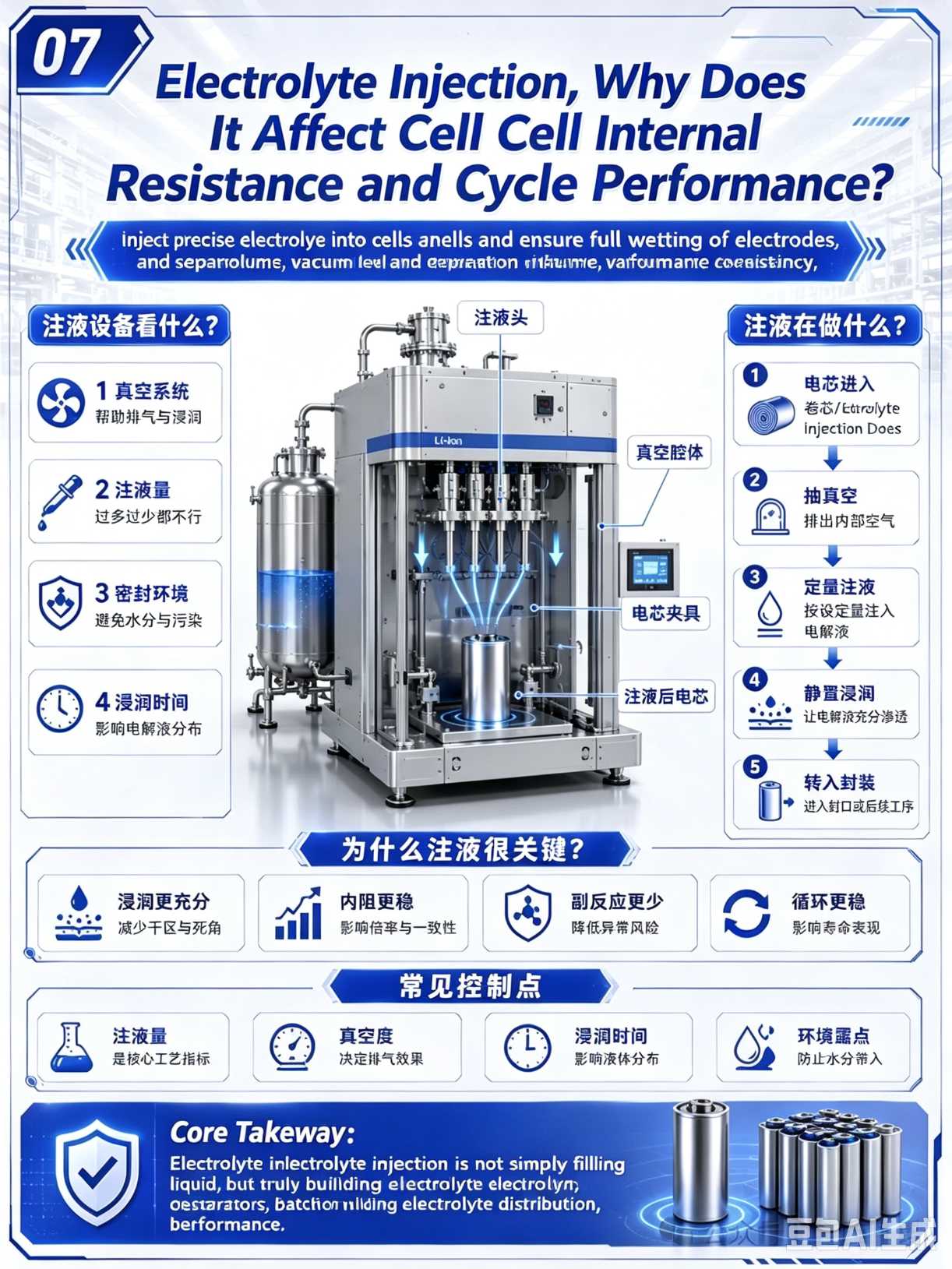
✅ ⑥ Electrolyte Injection: Infusing "Blood" into Battery Cells
A fixed amount of electrolyte is injected into the cell shell under a high-vacuum environment to ensure full infiltration of electrode micropores.
Key Takeaway: Insufficient electrolyte causes capacity loss, while excessive electrolyte leads to battery swelling. Inadequate infiltration results in uneven SEI film formation and increasing cell voltage differences; uncontrolled electrolyte dosage aggravates charging and discharging side reactions and causes battery bulging.
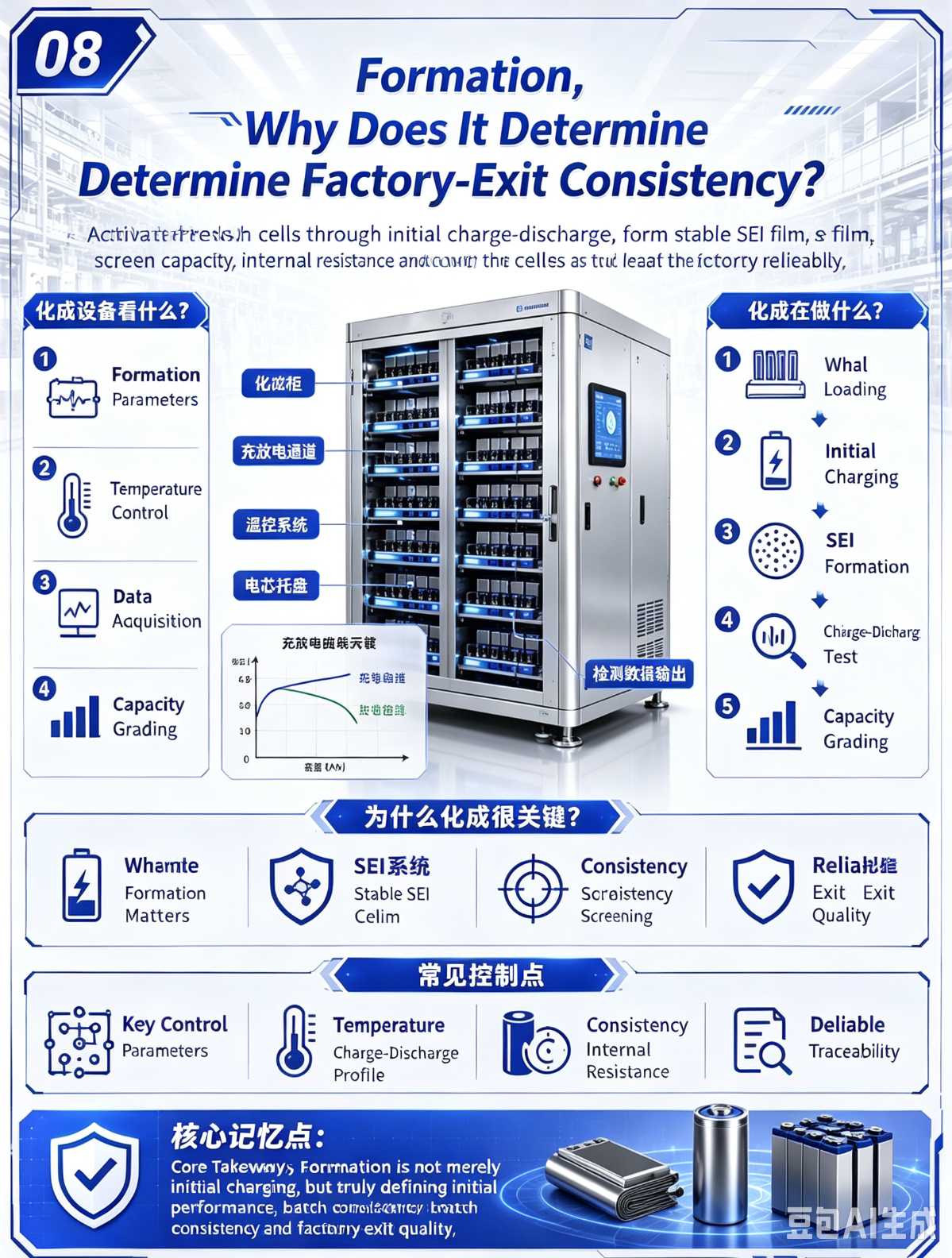
✅ ⑦ Formation: The "First Breath" of New Batteries
Fresh cells undergo initial low-current charging and discharging to form a dense and stable Solid Electrolyte Interphase (SEI) film on the electrode surface.
Key Takeaway: The quality of the SEI film defines battery service life. Improper formation processes lead to uneven, loose and fragile SEI films, which continuously consume electrolyte during cycling and cause progressive battery performance degradation.
After completing the seven core processes, cells will undergo capacity sorting, internal resistance testing and self-discharge screening before PACK assembly.
There are no shortcuts in lithium-ion battery manufacturing. Superior quality stems from rigorous control of every process detail.
Original Author: Quality‑Focused Lithium