1. New energy storage is in a golden period of rapid growth
1.1 Global New Energy Storage Maintains Rapid Growth
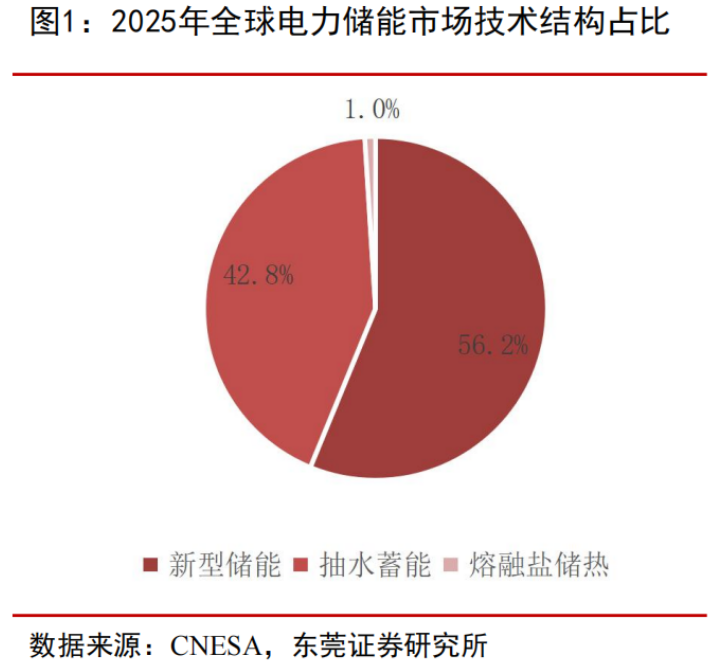
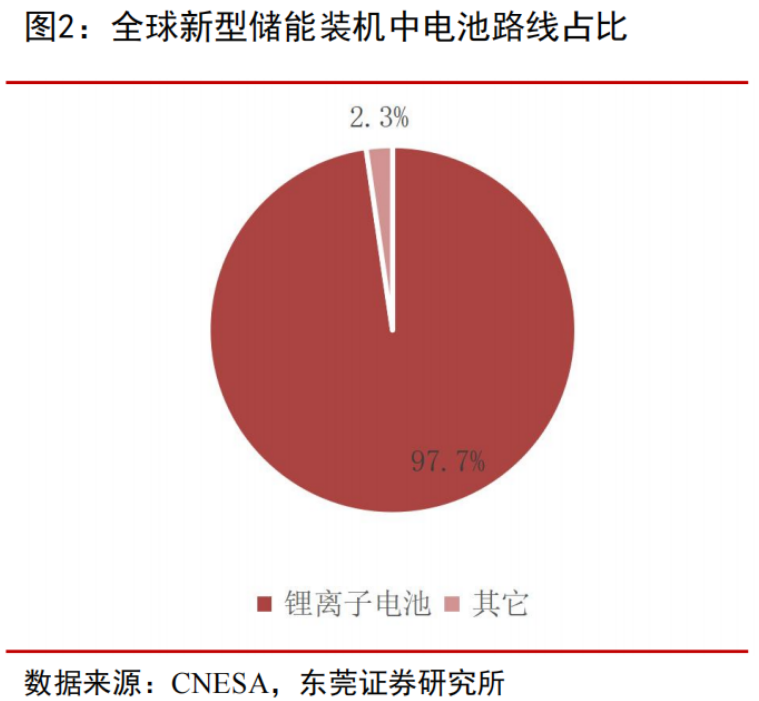
According to statistics from the Zhongguancun Energy Storage Industry Technology Alliance (CNESA), by the end of 2025, the cumulative installed capacity of global operational power storage projects will reach 496.2GW, a year-on-year increase of 33.3%. From a technical structure perspective, new energy storage continues to maintain rapid growth, with cumulative installed capacity reaching 278.7GW/687.5GWh, up 68.5% and 79.9% year-on-year. In terms of battery technology routes, lithium-ion battery technology dominates global new energy storage installations, accounting for as much as 97.7%.
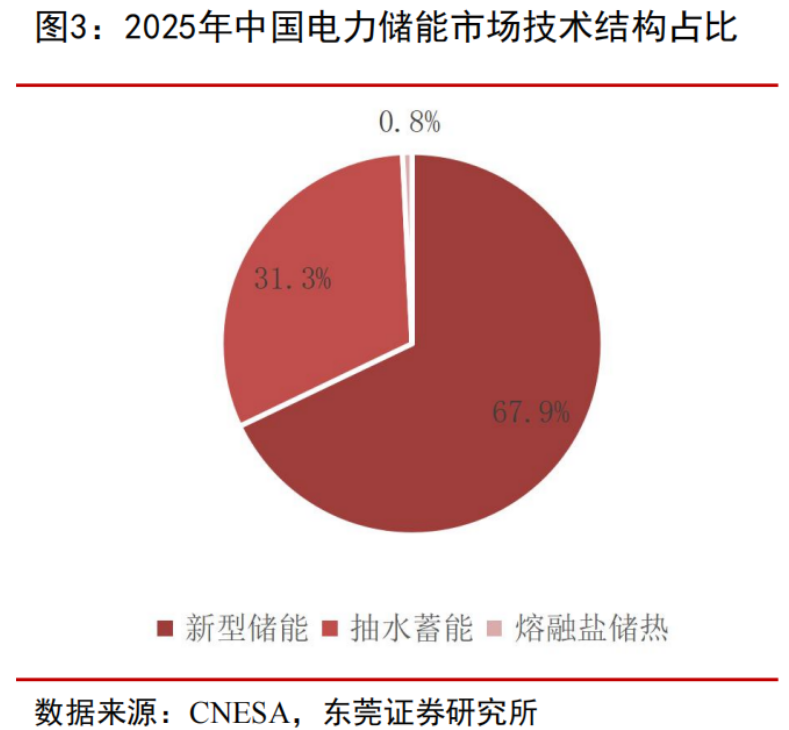
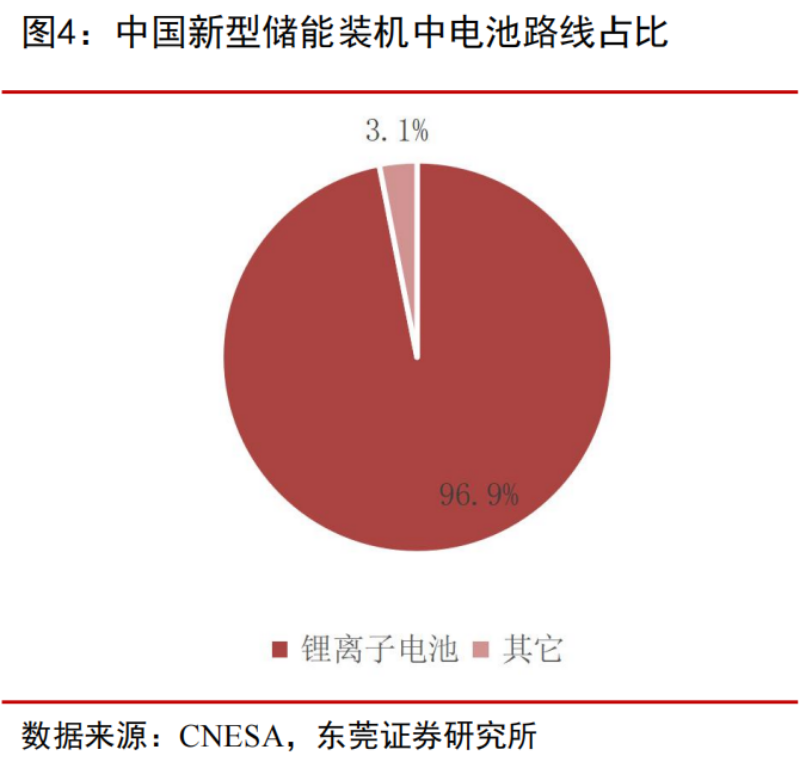
By the end of 2025, China's cumulative installed capacity of power storage projects has reached 213.3GW, accounting for 43% of the global market total, with a year-on-year increase of 54%. Among them, the cumulative installed capacity of new energy storage reached 144.7GW, accounting for more than two-thirds of the total domestic power energy storage scale, a 45-fold increase compared to the end of the 13th Five-Year Plan, and accounting for 51.9% of the global new energy storage market.
Against the backdrop of deepening energy transition and increasing demand for power system flexibility, energy storage is rapidly becoming a vital supporting resource for the global power system. By 2025, the installed capacity of newly commissioned power storage projects worldwide will exceed 100GW, reaching 123.9GW, a year-on-year increase of 49.3%. Among these, new energy storage accounted for over 90% of new installations, reaching 113.3GW/305.8GWh, up 52.9% and 72.0% year-on-year.
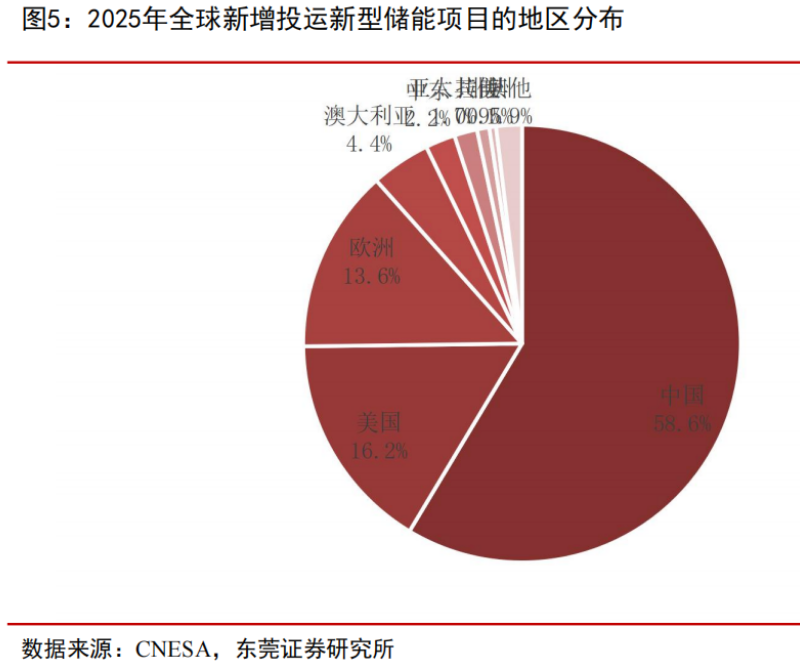
In terms of regional distribution, China, the United States, and Europe are the top three regions in the global energy storage market and continue to lead the development of the global energy storage industry. With the rapid rise of emerging energy storage markets such as Australia, the Middle East, and Latin America, the global energy storage market is gradually expanding into broader regions.
1.2 Domestic policies continue to promote the development of new energy storage
Guided by the "dual carbon" goals, the country is accelerating the construction of a new power system dominated by new energy, which is a key measure to achieve the "dual carbon" strategic objectives. New power systems refer to power systems dominated by new energy sources such as wind and solar energy, with the core goal of moving from "high-carbon power" to "smart low-carbon power." New energy storage is the core support of new power systems, playing a key role as both a "ballast stone" and a "stabilizer." In recent years, the country has attached great importance to the development of new energy storage.
The 2026 government work report clearly proposes "focusing on building a new power system, accelerating smart grid construction, developing new energy storage, expanding green electricity applications," and "implementing new infrastructure projects such as ultra-large-scale intelligent computing clusters and computing-power collaboration." *** includes computing-power collaboration in the government work report, injecting strong incremental momentum into the energy storage market.
On April 21, 2026, the State Council Information Office held a press conference on "Industrial and Information Technology Development in the First Quarter of 2026." The Ministry of Industry and Information Technology stated that computing power infrastructure has become a key foundation for driving the development of artificial intelligence. Currently, the Ministry of Industry and Information Technology is conducting policy research and standard formulation for computing-electricity collaboration.
On April 22, 2026, the General Office of the CPC Central Committee and the General Office of the State Council issued the "Opinions on Doing Energy Conservation and Carbon Reduction Work at a Higher Level and with Higher Quality," clearly proposing reasonable control of coal power installed capacity and power generation, vigorous development of non-fossil energy and new energy storage, accelerating the construction of new power systems, scientifically planning pumped storage, innovating green power direct connections, smart microgrids, and other business models to promote green power consumption.
By 2026, the domestic capacity price compensation policy will be fully implemented, marking the turning point for the commercialization of independent energy storage.
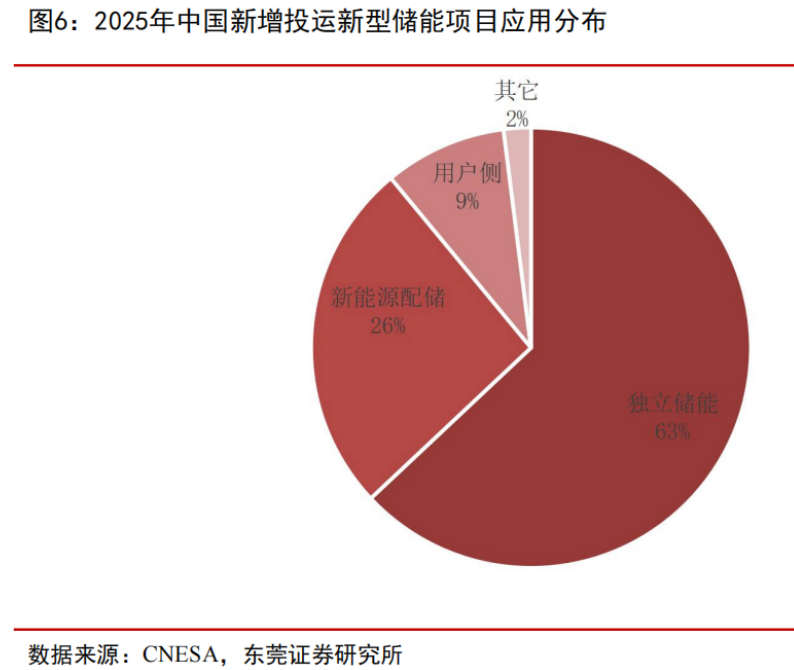
The NDRC's 2025 Document No. 136 has removed the requirement for mandatory new energy storage allocation, promoting the industry's transition to independent energy storage. Subsequently, local governments successively introduced capacity electricity price subsidy policies, causing investment returns on energy storage projects to generally exceed 6%, significantly improving the economic viability of energy storage and effectively stimulating a surge in demand for independent energy storage. From the perspective of application distribution, standalone energy storage has become the main development model. By 2025, standalone storage will account for over 60% of newly commissioned new energy storage projects nationwide. Energy storage is shifting from a policy-driven "supporting resource" to a "core support resource" that actively participates in the power market and couples generation-grid-load sources.
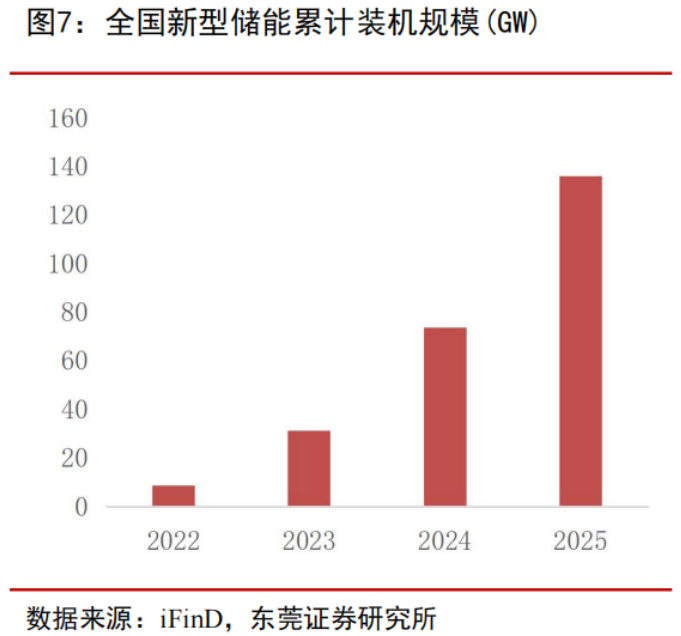
By the end of 2025, the cumulative installed capacity of new energy storage nationwide will reach 144.7GW, an 85% year-on-year increase, and the historical *** surpasses 100GW. In September 2025, the National Development and Reform Commission and the National Energy Administration released the "Special Action Plan for Large-scale Construction of New Energy Storage (2025–2027)," proposing that by 2027, the national installed capacity of new energy storage will reach over 180GW, driving direct investment of about 250 billion yuan for projects. The technology route for new energy storage will still be mainly lithium battery storage.
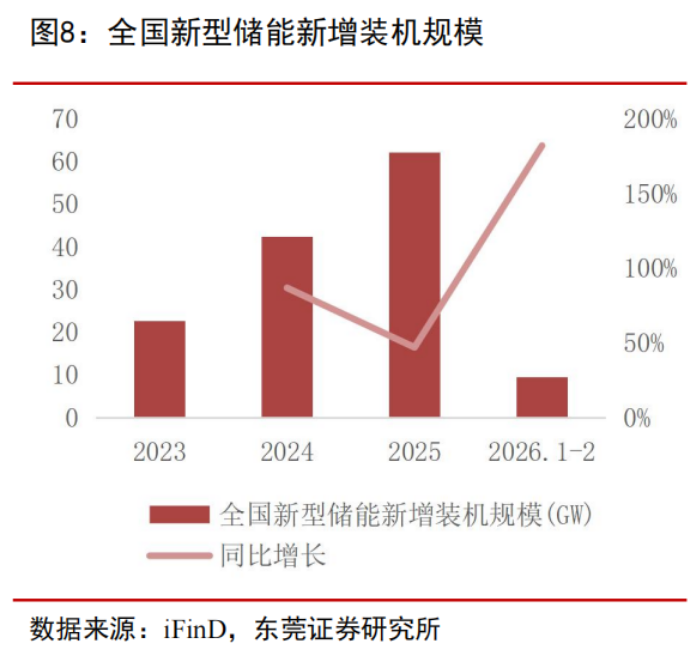
In January 2026, the National Development and Reform Commission and the National Energy Administration issued the "Notice on Improving the Generation-Side Capacity Price Mechanism" (Fa Gai Price [2026] No. 114), clearly establishing a national-level independent new energy storage capacity pricing mechanism, with capacity pricing based on reliable capacity. The capacity price level is based on the local coal power capacity price standard, converted according to peak capacity at a certain ratio (conversion ratio is the duration of continuous full-power discharge / the duration of the net load peak for the year, *** not exceeding 1), and is determined by considering factors such as the progress of power market construction and power system demand. By providing stable compensation similar to a "guaranteed minimum return," the capacity tariff mechanism significantly improves the economics and investment return expectations of independent new energy storage projects, and is expected to drive rapid growth in domestic energy storage installation demand in 2026. From January to February 2026, new domestic new energy storage installations reached 9.5GW, a year-on-year surge of 182%. Among them, emerging application scenarios such as AI data centers, direct green power connections, and zero-carbon parks are rapidly rising, accelerating energy storage's leap from a "regulation accessory" to an energy foundation for the AI era.
1.3 Overseas energy storage market remains prosperous
Driven by energy security strategies and the AI computing infrastructure boom, the overseas energy storage market is flourishing in multiple areas.
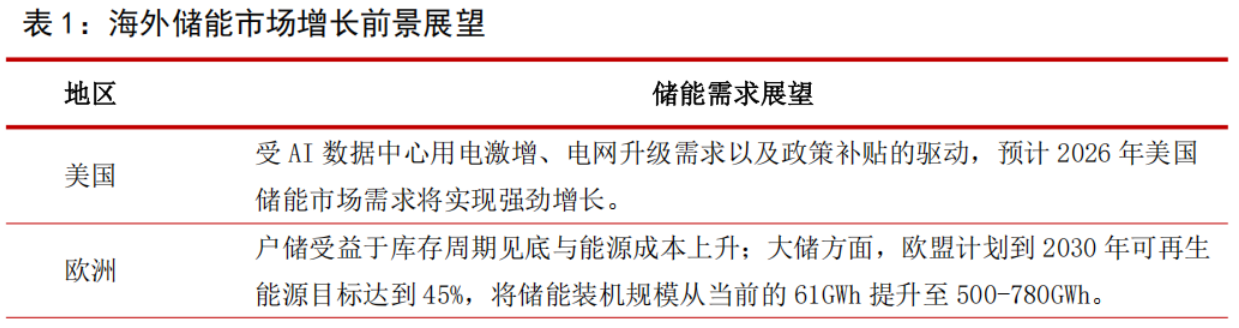
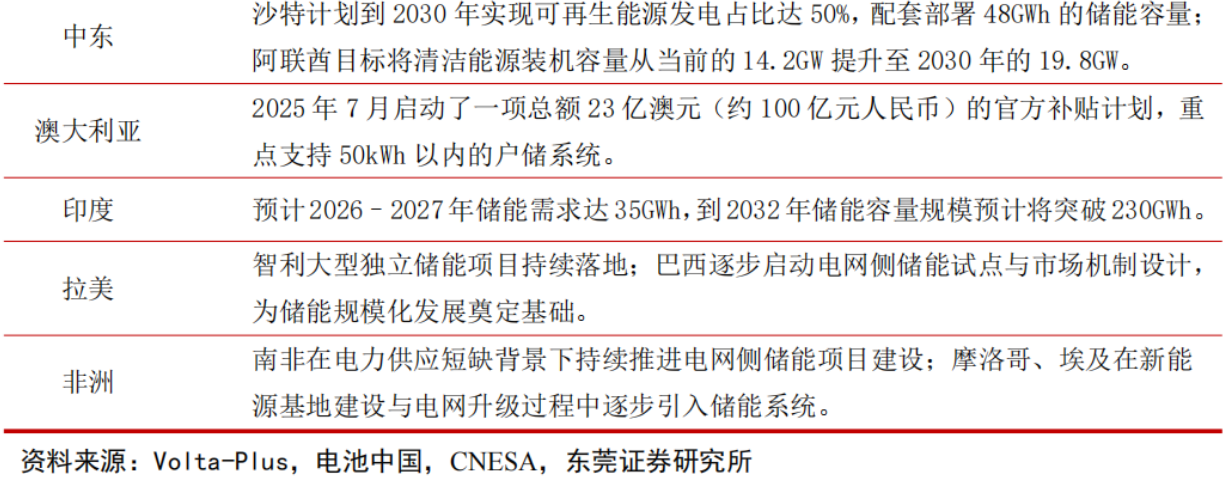
As energy transition strategies in various regions around the world deepen, the proportion of new energy is rapidly increasing, grid infrastructure is relatively weak, and the explosion of AI data centers has driven a surge in electricity demand, all of which are driving rapid growth in the scale of new energy storage installations overseas. The overseas market has become an important growth pole for the global energy storage market. By region, core markets represented by Europe and the US remain strong, while emerging markets represented by the Middle East, Australia, and Southeast Asia are rising rapidly.
Driven by surging electricity demand for AI data centers, the need to upgrade aging grids, and policy subsidies, the U.S. is expected to continue strong growth in energy storage demand in 2026. Europe is focusing on renewable energy grid integration and power supply security, with demand for large-scale storage, residential storage, and commercial and industrial energy storage surging across the board. Meanwhile, emerging markets represented by the Middle East, Australia, and India, though small in base, are growing significantly. For example, in Middle Eastern regions such as Saudi Arabia and the UAE, projects based on large new energy bases are accelerating the deployment of energy storage systems; Australia's residential photovoltaic penetration rate is relatively high but storage allocation is low. The government's large-scale subsidy policy will greatly stimulate demand growth for residential storage; India is accelerating the construction of power infrastructure, and energy storage projects are rapidly shifting from policy planning to practical implementation; Emerging markets in Southeast Asia have also introduced incentives and large-scale projects to support the construction of new energy storage systems. The comprehensive expansion of overseas markets has provided abundant opportunities for China's energy storage industry chain to go global.
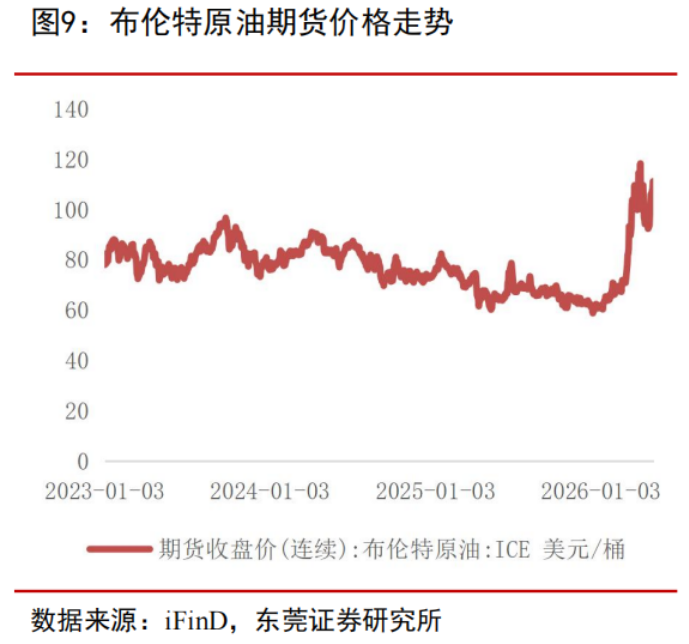
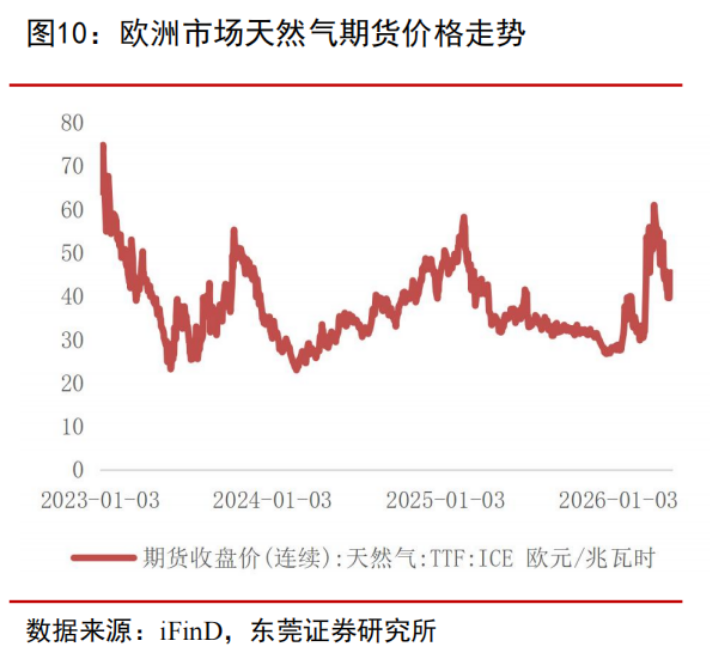
Overseas energy security strategies further boost demand for energy storage. Since early March 2026, the US-Iran conflict has triggered a sharp rise in prices for traditional energy sources such as oil and natural gas. As of April 27, 2026, Brent crude oil futures were $108.30 per barrel, a surge of 78.13% from the beginning of the year; European natural gas futures price is 44.29 euros/MWh, up 53.81% from the beginning of the year. The turbulence in the electricity market caused by soaring oil and gas prices has rapidly boosted overseas demand for energy storage. Especially in Europe, electricity prices are directly linked to the marginal pricing of natural gas—when natural gas prices rise, terminal electricity prices rise accordingly, causing residential electricity costs to soar sharply and directly stimulating demand for residential energy storage. At the same time, amid energy security anxiety, countries are increasingly viewing energy storage as a key means to reduce dependence on fossil fuels, accelerating the introduction of incentive policies. Facing the dual pressures of high energy prices and unstable supply, the economic viability and rigid demand of residential storage are both increasing, and the overseas energy storage market is ushering in a new cycle of prosperity.
2. The tight supply-demand balance pattern for energy storage cells will continue
2.1 The battery is the core component of the energy storage system
A lithium battery energy storage system is an electrochemical energy storage device centered on lithium batteries. It can perform bidirectional conversion between electrical and chemical energy to achieve power storage and release, and is used to regulate grid loads, balance supply and demand, and improve energy utilization efficiency.
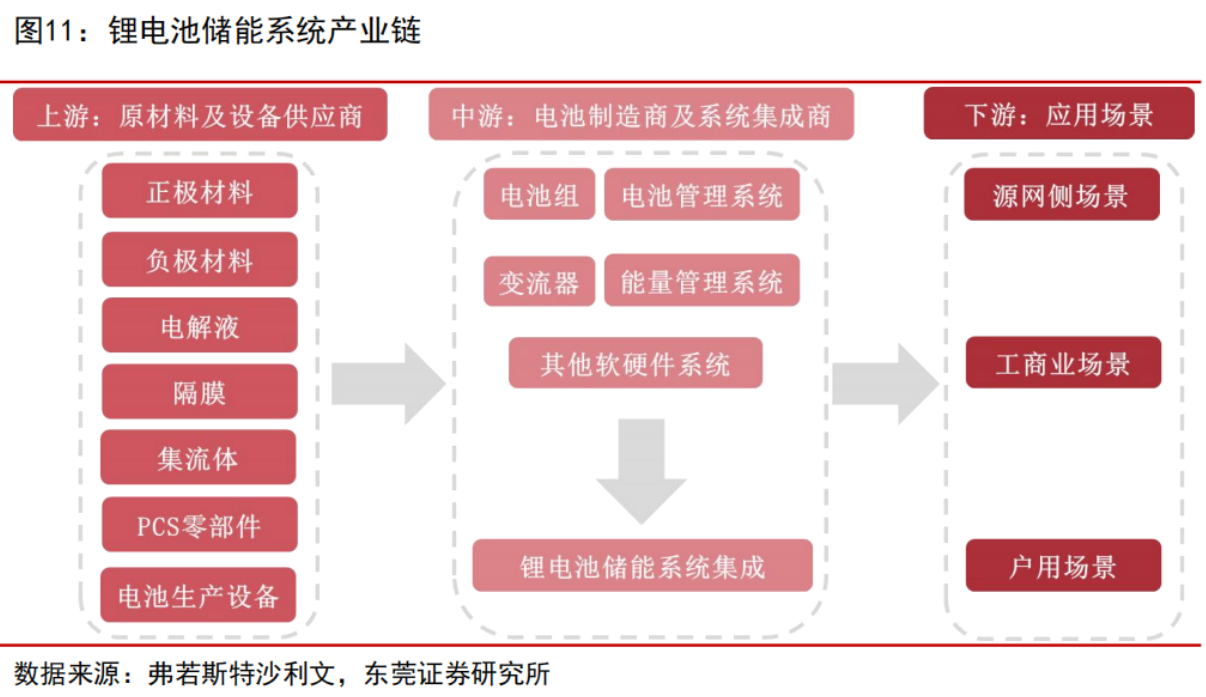
The lithium battery energy storage system industry chain includes upstream raw material and equipment suppliers, midstream battery manufacturers and system integrators, as well as downstream application scenarios.
Upstream mainly includes raw materials for battery cells such as cathode/anode/electrolyte/separator, PCS components such as components/transformers, and battery production equipment.
The midstream mainly includes lithium battery packs, energy storage converters (PCS), battery management systems (BMS), energy management systems (EMS), and lithium battery energy storage system integrators. PCS is the "executor" of the energy storage system, mainly responsible for charging and discharging batteries. When there is surplus electricity, it converts AC power from the grid into DC to charge the battery; When power is needed, the DC power in the battery is converted into AC and sent back to the grid. The BMS is the "steward" of battery safety, with its main task of ensuring the safety and health of energy storage battery packs. It monitors key parameters such as battery voltage, current, and temperature in real time, assesses the battery's health status, and prevents damage or safety risks. EMS collects various data from PCS, BMS, and other equipment, forming optimized control decisions based on electricity prices, load demands, grid instructions, etc., coordinating the operation of all equipment. Among them, PCS is the most important technical barrier in the midstream of energy storage, and its performance directly affects energy conversion efficiency and grid support capacity.
The downstream mainly covers various application scenarios, including source-on-grid side scenarios, commercial and industrial scenarios, and residential scenarios.
In the energy storage system industry chain, battery cells account for the most significant value segment, accounting for about 60% of the total system cost, and are the core determining the energy density and cycle life of energy storage systems.
2.2 Global energy storage battery shipments grew rapidly in the first quarter
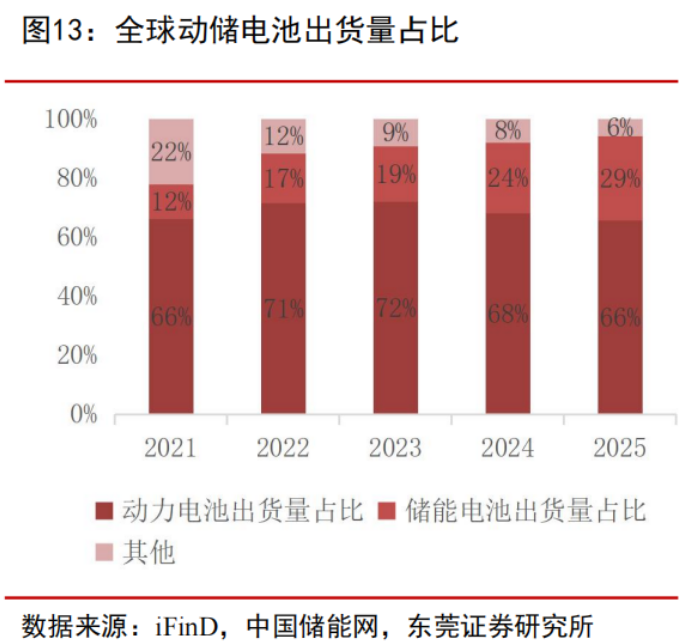
Energy storage is currently the fastest-growing direction for lithium batteries. The significant growth in global lithium battery shipments exceeding expectations mainly comes from the energy storage battery sector, especially driven by overseas energy storage market demand, which has driven a substantial year-on-year increase in global energy storage battery shipments. By 2025, energy storage battery shipments will account for 29% of global lithium battery shipments, and the weight of energy storage as the second growth pole of lithium batteries continues to rise.
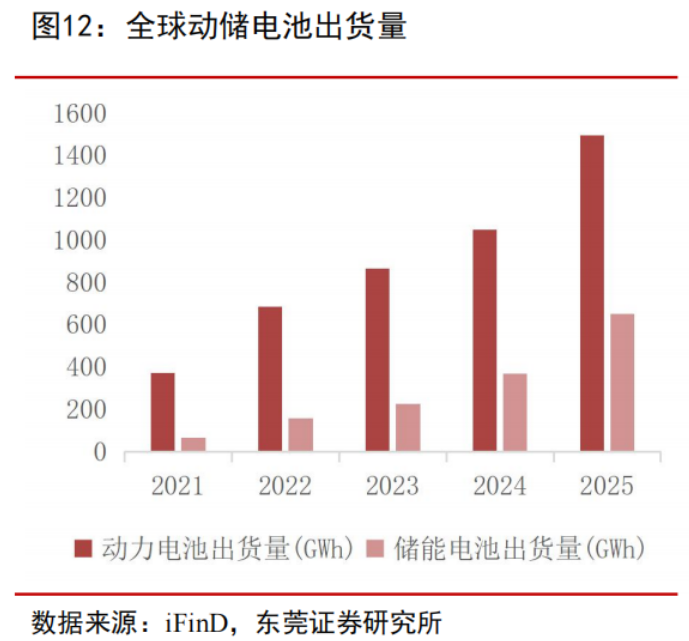
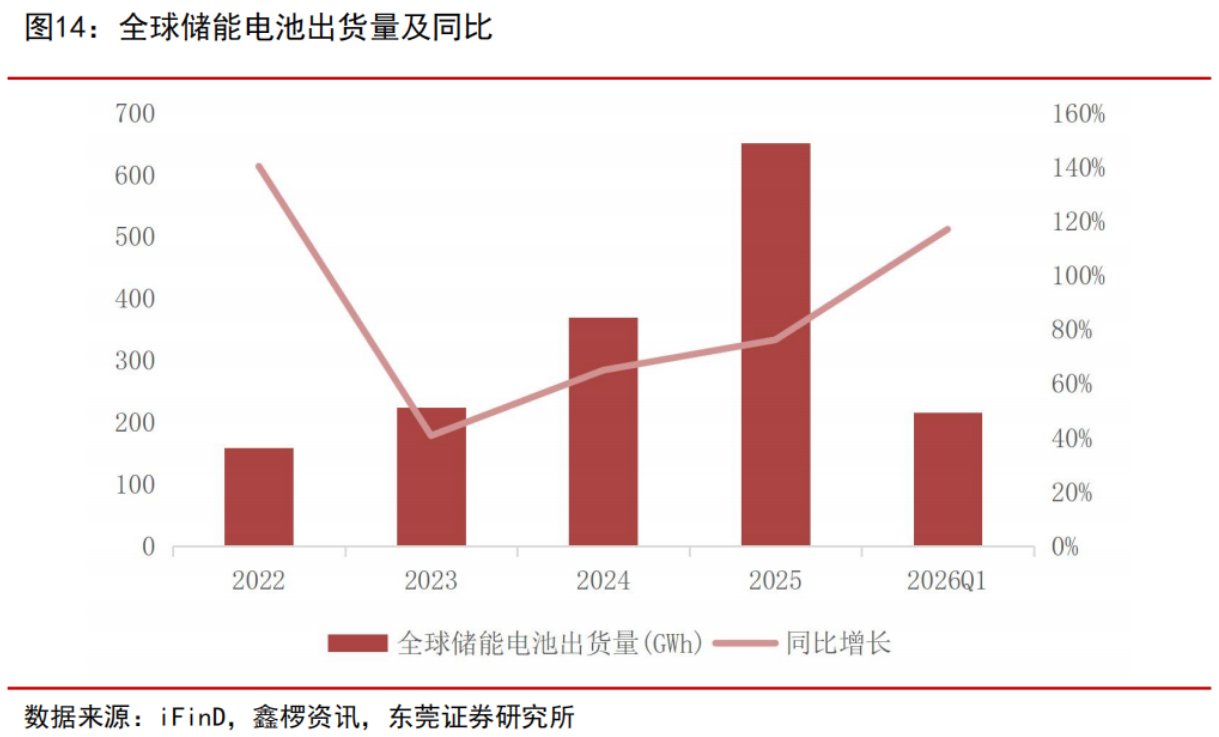
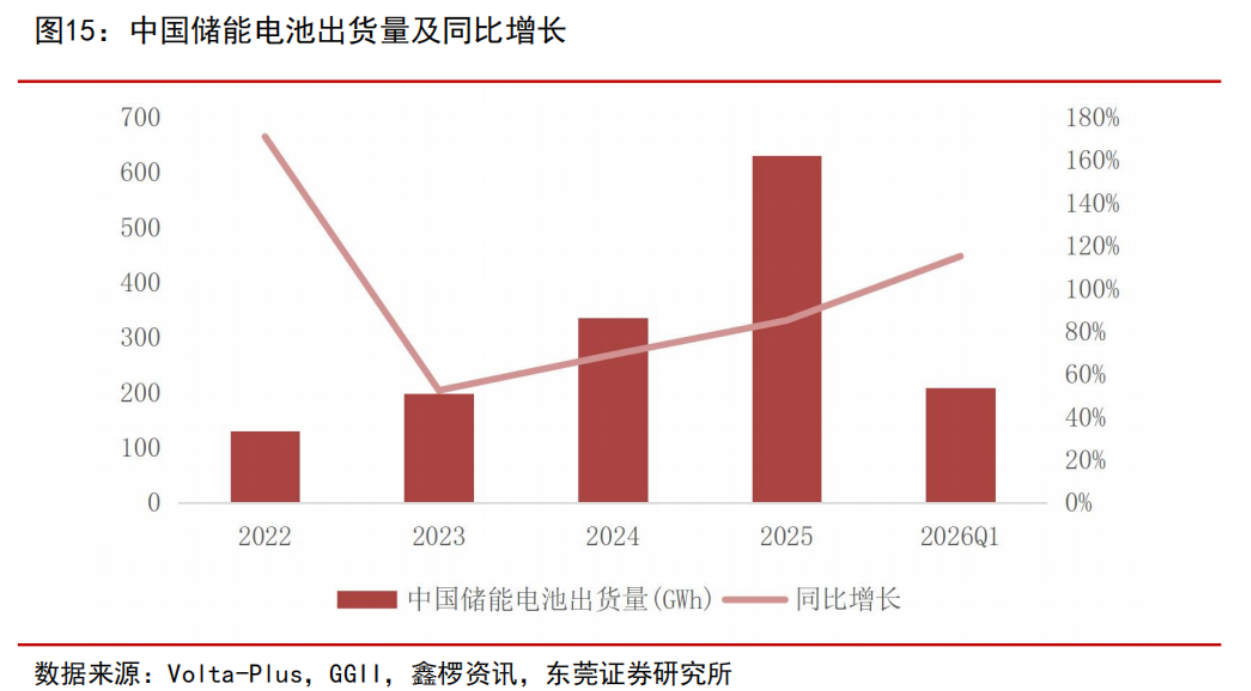
Global shipments of energy storage batteries in the first quarter of 2026 will grow significantly year-on-year, with the growth rate continuing to accelerate. By 2025, global cumulative shipments of energy storage batteries will reach 651.5 GWh, a year-on-year increase of 76.2%, with the growth rate increasing by 11.23 percentage points compared to 2024. Since entering 2026, the energy storage market has continued its high growth trend in the fourth quarter of last year. In the first quarter of 2026, global shipments of energy storage batteries will reach 216 GWh, a year-on-year increase of 117%, with the growth rate accelerating further. Europe, Asia-Pacific, and the Middle East became the regions with the strongest demand in Q1. According to Xinluo Information, the energy storage market is expected to maintain rapid growth in 2026, with battery shipments expected to reach 1090 GWh, a year-on-year increase of about 70%.
China's share of global energy storage battery shipments continues to rise. According to GGII data, China's energy storage battery shipments are expected to reach 630 GWh by 2025, an 85% year-on-year increase. Although the mandatory storage allocation policy will be canceled domestically in 2025, supported by capacity tariff policies, the independent energy storage market will achieve growth beyond expectations; At the same time, overseas energy storage demand is also showing rapid growth. In the first quarter of 2026, China's energy storage battery shipments will continue their rapid growth trend, reaching 209 GWh, a year-on-year increase of 115%.
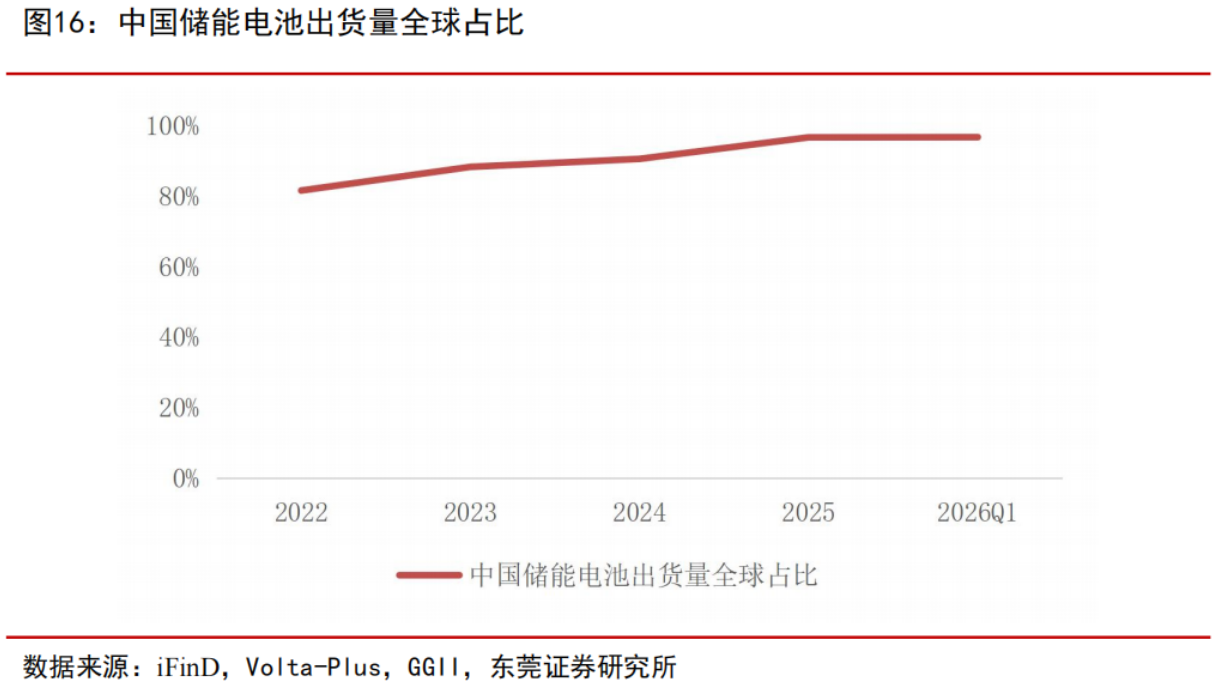
In recent years, China's share of global energy storage battery shipments has shown a continuous upward trend. In Q1 2026, its global share further rose to 96.76%, holding a leading position globally.
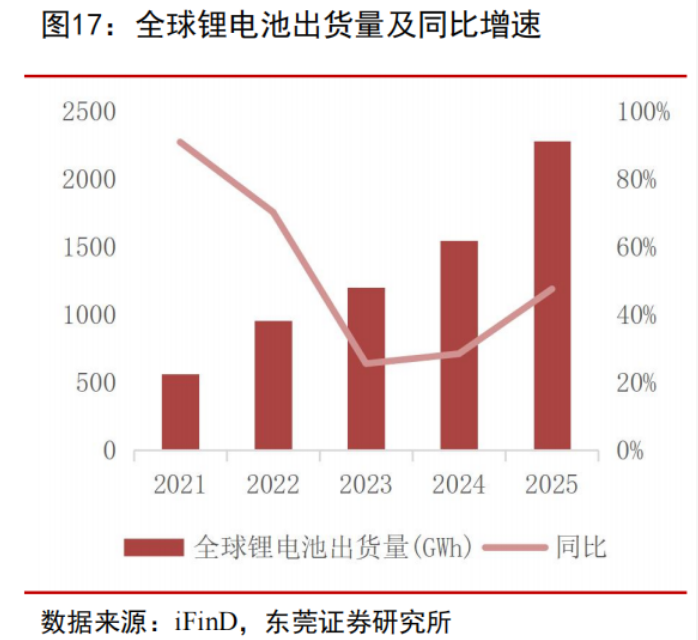
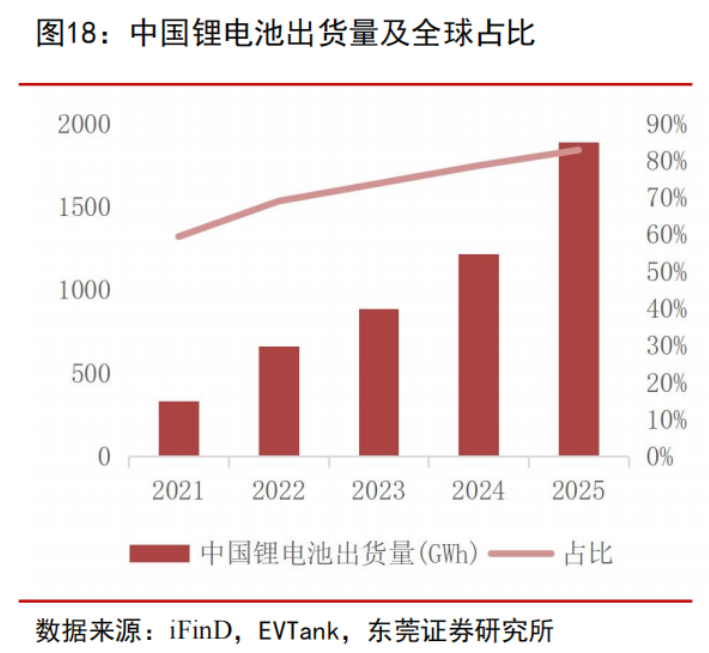
By 2026, global lithium battery shipments are expected to grow by over 30%. Global lithium battery shipments are expected to reach 2,280.5 GWh by 2025, a year-on-year increase of 47.6%, 19.1 percentage points higher than the 2024 growth rate, showing a clear acceleration in growth. Among them, China's lithium battery shipments reached 1,888.6 GWh, a year-on-year increase of 55.5%, 18.6 percentage points higher than the 2024 growth rate. The share of total global lithium battery shipments reached 82.8%, with the global shipment share continuing to rise. According to EVTank, global lithium battery shipments are expected to reach 3,016 GWh by 2026, a year-on-year increase of 32.3%. According to Xinluo Lithium Battery, global lithium battery production is expected to reach 3,092 GWh by 2026, a year-on-year increase of 34.6%.
2.3 AIDC energy storage has become a new growth engine
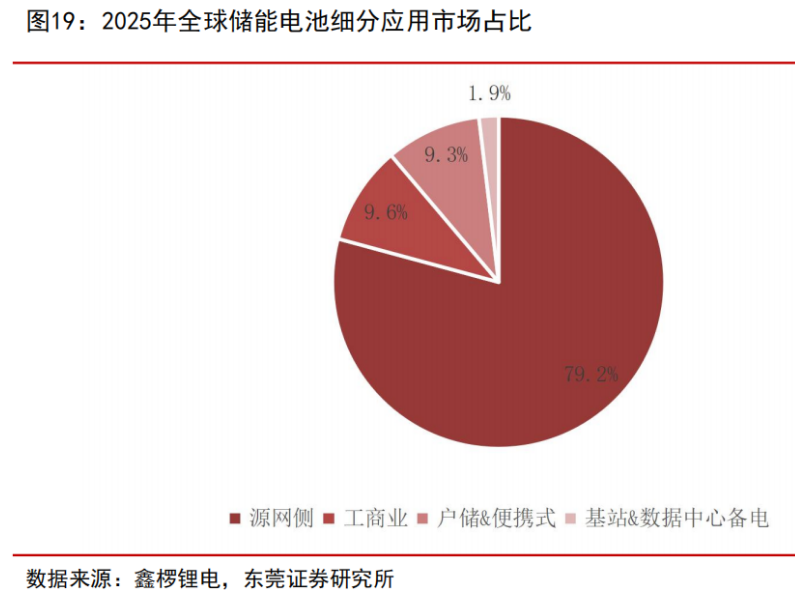
Looking at the segmented application fields of energy storage batteries, by 2025, the source-on-grid side market will account for 79.2%, the commercial and industrial market 9.6%, residential storage & portable 9.3%, and base station & data center backup power market 1.9%. With the rapid development of the global AI industry, demand for AI computing power is experiencing explosive growth, and energy storage application scenarios are rapidly extending into digital economy infrastructure. As the core infrastructure for the development of the digital economy, AI computing power centers consume huge amounts of electricity and require extremely high power supply stability. Energy storage not only ensures uninterrupted power supply for computing power centers but also helps them absorb green electricity, making it an essential component for their construction. With the explosive demand for large model training and inference, ongoing AI infrastructure construction, global data center power consumption is rapidly rising, supporting energy storage systems are entering a peak period of large-scale deployment, and 2026 will be a major delivery year.
2.4 Energy storage cell prices continue to rise
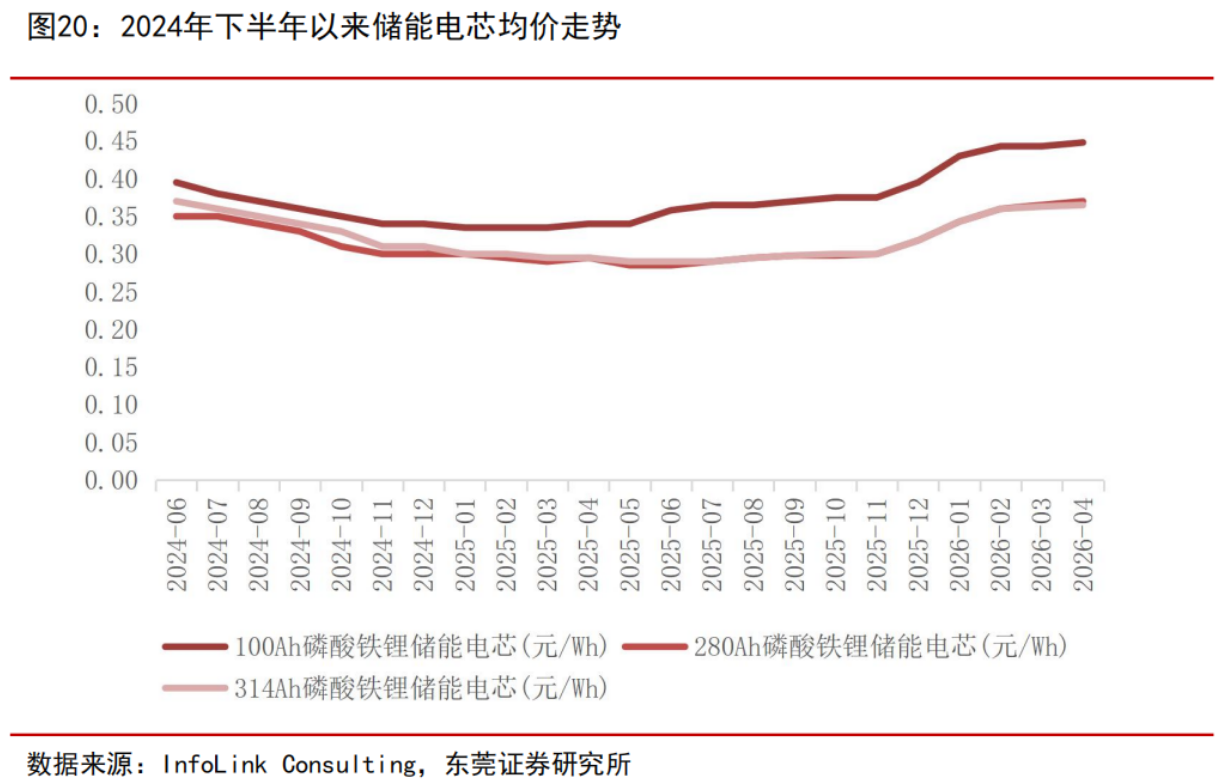
The tight supply-demand balance continues, and energy storage cell prices keep rising. In the first half of 2025, energy storage cell prices remained relatively stable, but since the second half of 2025, domestic demand for energy storage cells has been strong, leading to tight supply. Since the second half of 2025, energy storage cell prices have bottomed out and rebounded, with residential storage mainly using 100Ah cells. Starting from mid-2025, 100Ah cells will be in short supply, leading to price increases; In the third quarter, 280Ah and 314Ah cells also began to rise in price due to supply shortages, with prices for various energy storage cell models rising by 25%-35% since the bottom. As of April 2026, under rising upstream raw material prices such as lithium carbonate and capacity constraints, the average prices of various energy storage cell models have shown a continuous upward trend. According to GGII, leading companies' energy storage cell orders have generally been scheduled to continue production through the end of 2026 to the end of Q2 2027. It is expected that by 2026, the energy storage battery market will add 250-300GWh of effective capacity, but compared to overall market growth, supply and demand will remain tightly balanced. Cell prices are expected to maintain a steady and rising trend, with leading companies likely to see both volume and profits increase.
3. Sodium battery volume is about to ramp up, and the prospects for energy storage applications are broad
3.1 Sodium batteries have differentiating advantages over lithium batteries
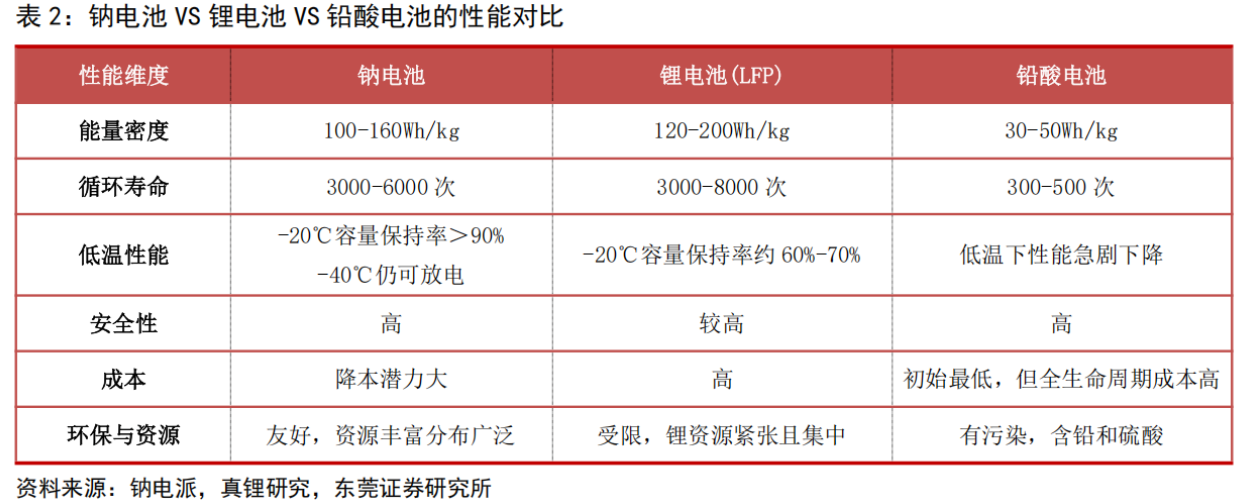
Sodium is a common and inexpensive basic element. Sodium resources are abundant on Earth, extremely widely distributed, and inexpensive to obtain. Compared to lithium batteries, sodium batteries have differentiated advantages such as abundant resources, low cost, high safety, superior low-temperature performance, and high rate of charge.
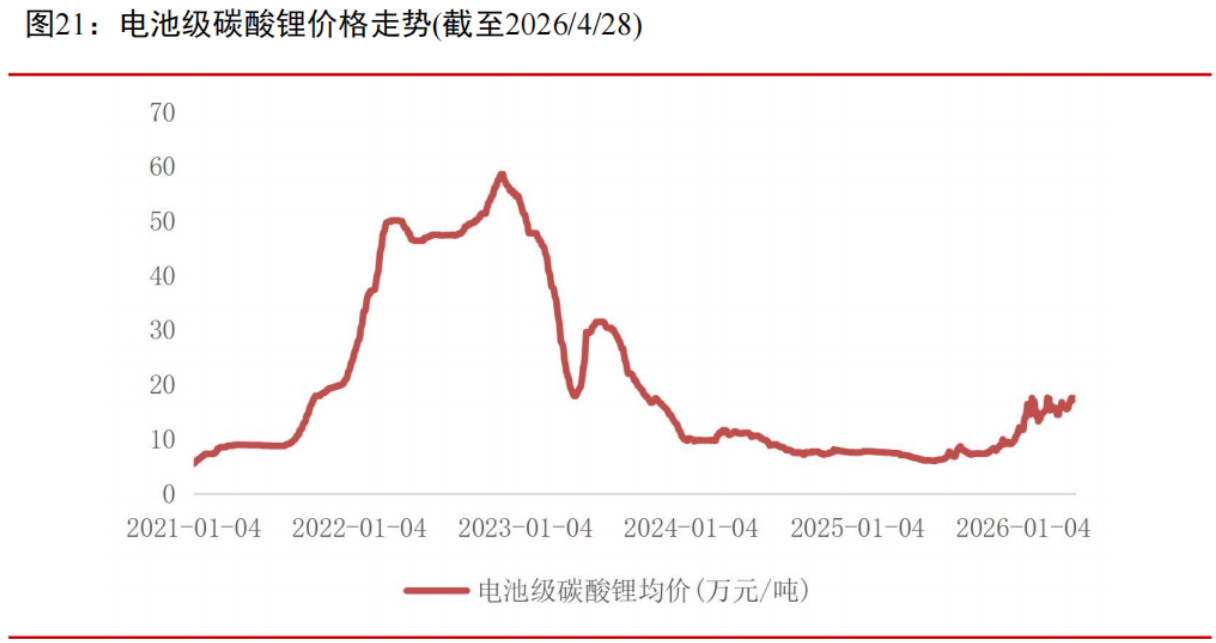
The upward trend in lithium battery material prices is accelerating the development of sodium batteries. Since the second half of 2025, the price of lithium carbonate, the upstream raw material for lithium batteries, has continued to rise. As of April 28, 2026, the average spot price of battery-grade lithium carbonate reached 175,000 yuan/ton, up more than 190% from the low point in June 2025. Currently, the price of lithium iron phosphate cells is about 0.35 yuan/Wh, and for every 100,000 yuan increase in lithium carbonate batteries, the cost of lithium battery cells increases by 0.06 yuan/Wh. According to Xinluo Sodium Electric's statistics, sodium battery prices will generally fluctuate downward in 2025. In 2025, the average price for layered oxide sodium battery cells in the industry is 0.55-0.6 yuan/Wh, polyanionic (NFPP) sodium cells are 0.45-0.55 yuan/Wh, and NFS sodium cells are 0.40-0.45 yuan/Wh. It is expected that by 2026, the cost of sodium battery cells will drop below 0.40 yuan/Wh, and with technological iteration and economies of scale, it is likely to further fall below 0.3 yuan/Wh in the future, highlighting its cost-effectiveness advantage.
3.2 Sodium batteries are one of the key technological routes for developing new energy storage
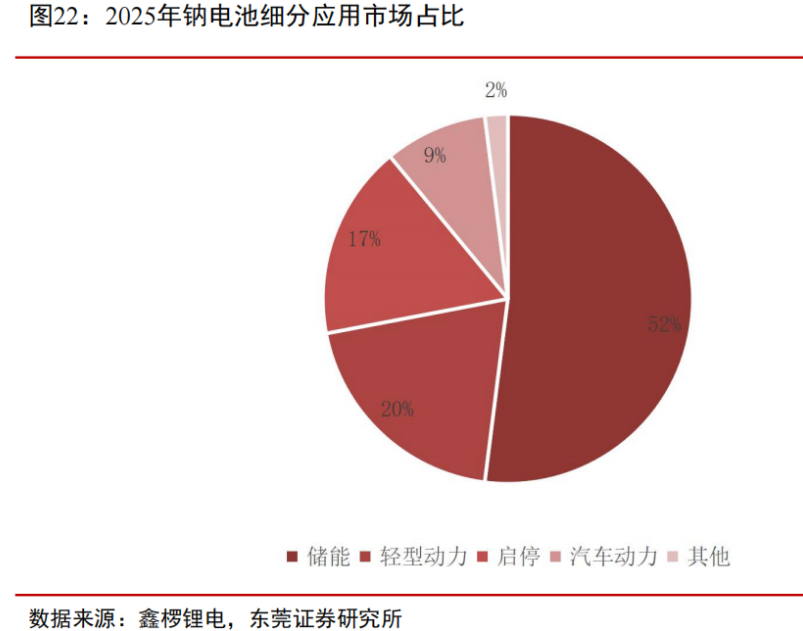
As a "new type of battery," sodium batteries have gradually been recognized at the national level as one of the key technological routes for ensuring energy security, developing new energy storage, and building strategic emerging industries. Considering that various energy storage scenarios require higher battery cycle life and safety performance but relatively low energy density requirements, sodium batteries have the potential to combine cost and performance advantages, making them a complementary product to lithium batteries in the energy storage field, effectively compensating for lithium batteries' shortcomings. The current innovative "lithium-sodium synergy" model is gradually highlighting the advantages of sodium batteries in energy storage scenarios. The lithium-sodium synergistic model leverages the energy storage advantages of lithium batteries while utilizing the high power characteristics of sodium batteries, achieving a balance between performance and cost. Currently, the lithium-sodium synergistic model has been validated in multiple energy storage scenarios. In terms of downstream market share, energy storage is currently the application market for sodium batteries, expected to exceed 50% by 2025.
Led by leading enterprises, sodium batteries are expected to accelerate their volume growth in the new energy storage field.
On the evening of April 21, CATL launched several cutting-edge battery products at the "2026 Super Technology Day" launch event, including the Naxin II sodium battery, which maintains over 90% capacity in extreme cold at -40°C and stable discharge at -50°C. Large-scale mass production is expected in the fourth quarter of 2026, with plans to replace 30%-40% of the lithium battery market in the future.
On April 27, CATL and Haibosichuang officially signed a strategic cooperation agreement for energy storage sodium-ion batteries, reaching a 3-year contract for 60GWh sodium-ion batteries. This is the largest global order for sodium-ion batteries to date. This cooperation marks that CATL has overcome the challenges of full-chain mass production of sodium-ion batteries, possesses the capability for large-scale delivery, and the commercialization path for sodium batteries in the energy storage field is already underway, with accelerated volume growth expected going forward.
Disclaimer: The content of this article is sourced from Dongguan Securities. The compilation and reprinting of this article is for the purpose of disseminating more information, does not represent the views of this official account, is for reference and learning purposes only, and does not constitute any investment advice. All the above reports were obtained by this platform through public and legal channels. The copyright of the report belongs to the original authors or publishing institutions. The videos, images, text, and works used in this article involve copyright issues. Please contact the editor at time to 19230831816 (same as WeChat), and we will delete them immediately. There is no commercial use whatsoever!